Repair vs Replace a Pool Pump
A bad pool pump can mean cloudy water, weak circulation, and bigger equipment problems if you wait too long. The smart choice depends on the pump’s age, the exact failure, energy use, and what a licensed, insured pool pro finds after inspection.
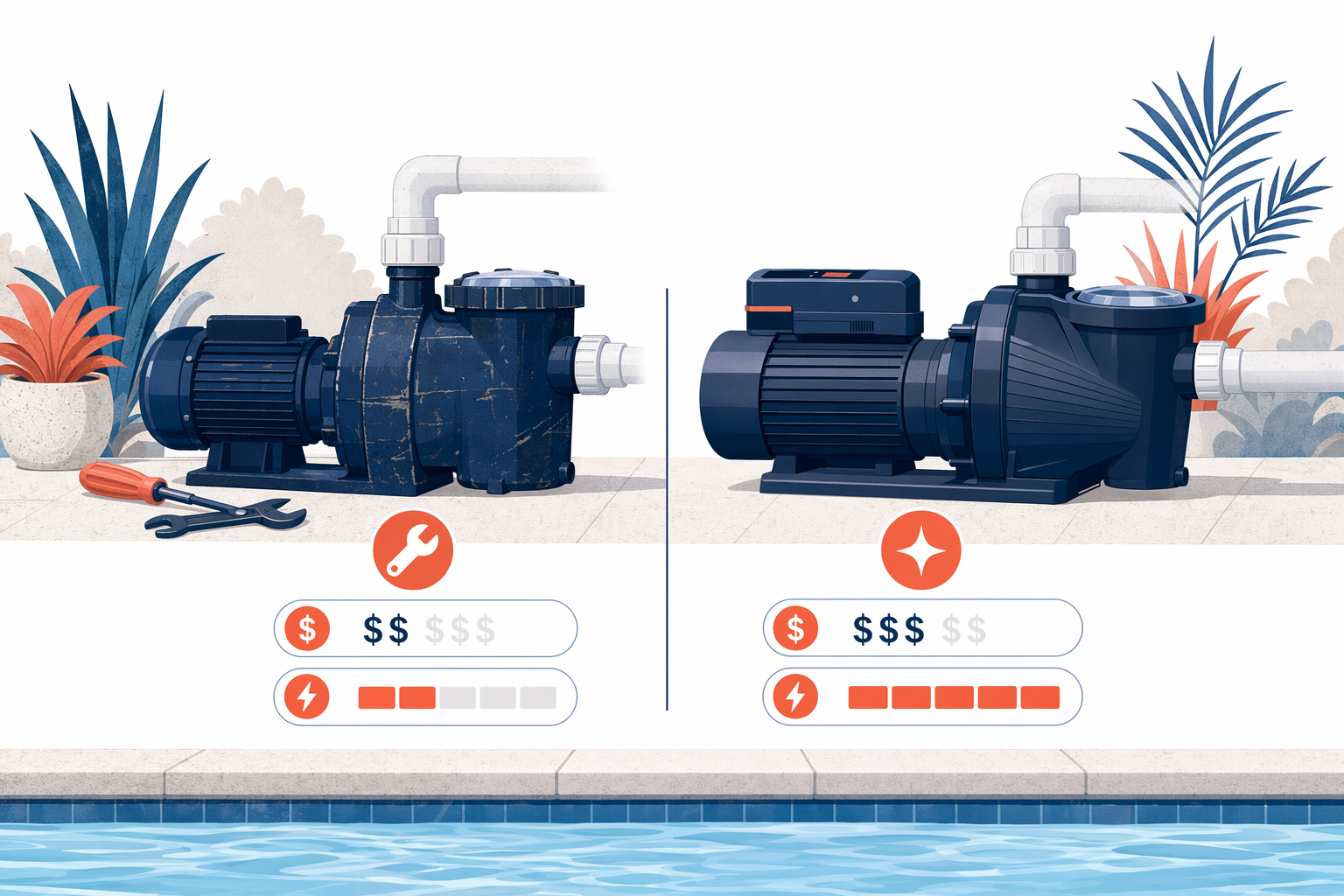
Start with the simple question: what actually failed?
Not every noisy or weak pool pump needs full replacement. Sometimes the motor is fine and the problem is a bad seal, clogged impeller, failing capacitor, worn bearings, or an electrical issue. Other times the housing is cracked, the motor is burned out, or the pump is old enough that putting more money into it does not make sense.
Here is the honest rule of thumb many pool owners use:
- Repair makes more sense when the pump is fairly new, the problem is limited, and the rest of the system is in decent shape.
- Replace makes more sense when the pump is older, has multiple problems, leaks from the body, trips breakers, or wastes a lot of electricity.
A typical pool pump replacement often runs about $700-$2,500 installed, depending on pump type, size, plumbing changes, controls, and your area. A smaller repair may cost much less, but the real price depends on the pool's size and condition, the equipment, the scope of work, and local labor rates.
If your pump issue is part of a larger equipment problem, this guide on pool equipment repair can help you understand what a pro may inspect.
Quick comparison: when repair usually wins, and when replacement usually wins
Repair is often the better call if:
- The pump is still within or near its expected service life.
- The motor starts and runs, but there is one clear problem.
- The wet end and housing are not cracked.
- The repair cost is small compared with replacement.
- You are otherwise happy with the pump's performance and noise level.
Replacement is often the better call if:
- The pump is older and has had repeat service calls.
- The pump body is cracked or leaking badly.
- The motor is failing and the rest of the pump is worn too.
- Your power bills are high and you have an older single-speed unit.
- Parts are hard to find or no longer make financial sense.
Side-by-side reality check:
1. Up-front cost
- Repair: usually lower if the problem is minor.
- Replace: higher at first, especially if plumbing or controls need updates.
2. Long-term value
- Repair: good if it buys several more reliable years.
- Replace: often better if the old pump is near the end of its life.
3. Energy use
- Repair: may not improve efficiency much.
- Replace: can cut operating cost if the new pump is more efficient.
4. Risk of another breakdown
- Repair: higher if several parts are already worn.
- Replace: lower if the full unit and related fittings are updated.
5. Noise and performance
- Repair: may improve some issues, but not all.
- Replace: often gives quieter operation and steadier flow.
Ask the pro to explain which part failed, why it failed, and whether that failure is likely to happen again soon somewhere else in the pump. Get the price and scope in writing before any deposit.
How to decide without getting talked into the wrong job
Use this simple checklist before you approve work:
- Find the pump age. If you do not know it, ask the pro to identify the model and approximate age. An older pump with a new repair today may still need replacement soon.
- Compare repair cost against replacement value. If the repair is a big chunk of the cost of a new pump, replacement may be the safer spend.
- Think about electricity use. An inefficient pump can cost you month after month. A lower energy bill may matter more than the cheapest short-term fix.
- Look at the whole equipment pad. A pump may be struggling because of dirty filters, suction leaks, bad valves, heater issues, or plumbing restrictions. If the root cause stays, the new repair may not last.
- Ask about warranty. Not a guarantee of future performance, but a useful sign of how the pro stands behind the specific repair or installation.
- Get at least two written estimates when the answer is not obvious. You compare the options. You choose who to hire. You hold the final payment.
A good pool pro should be able to say something like: "This pump can be repaired because the motor is sound and the leak is limited to the seal," or "This unit is at the point where replacement is more cost-effective because the motor, bearings, and housing are all showing wear."
If you want help finding pros to compare, get matched for free. PoolSteward does not do the work. We help you connect with licensed, insured pool service pros, and you verify license and insurance yourself.
Common pump symptoms and what they may point to
Some symptoms sound scary but turn out to be smaller repairs. Others are red flags.
- Loud grinding or screeching: often points to motor bearings or motor wear. Could be repairable, but on an older pump it may push the decision toward replacement.
- Humming but not starting: may be a capacitor, wiring issue, or seized motor. This is one where a diagnosis matters a lot.
- Water leaking under the pump: could be a shaft seal, union, lid O-ring, or cracked housing. A cracked body often makes replacement more likely.
- Weak flow or poor circulation: may be the pump, but also could be a dirty filter, clogged impeller, suction-side air leak, or valve problem.
- Breaker keeps tripping: can point to motor failure or electrical problems. Have a qualified, licensed pro inspect it.
- Cloudy water after pump trouble: poor circulation can quickly affect water quality. Review pool water chemistry basics if your water got off track while the system was down.
Important: pumps connect to electricity and moving equipment, and pool systems involve water and chemicals. Do not guess. Hire licensed and insured pool pros, verify that yourself, and ask them to explain the safest fix in plain language.
What to do next
If your pump is acting up, do not wait until the water turns green or another piece of equipment is stressed by poor circulation.
- Write down the symptoms: noise, leaks, weak flow, tripped breaker, air bubbles, or failure to start.
- Take photos of the pump label and the equipment pad.
- Ask for a written diagnosis with repair option, replacement option, and the pros and cons of each.
- Compare typical pricing and options on our costs page.
- Choose a licensed, insured pro and verify both before work starts.
And one more safety reminder: drowning is fast and silent. Never leave a child unattended near water. Use layers of protection like fences, self-closing gates, alarms, covers, and close supervision, and follow local safety and building codes. Around chemicals, store them safely, never mix chemicals, and follow label directions. A pro can often handle dosing more safely.
If your pool pump is failing, do not assume you need a new one right away. Ask a licensed, insured pool pro to diagnose the exact problem, show you a written repair option and a written replacement option, compare the long-term value, and only then decide.