Pool safety basics & drowning prevention
A pool can be a great part of the home, but water can turn dangerous fast. Drowning is often **fast and silent**, so pool safety needs more than one rule and more than one barrier.
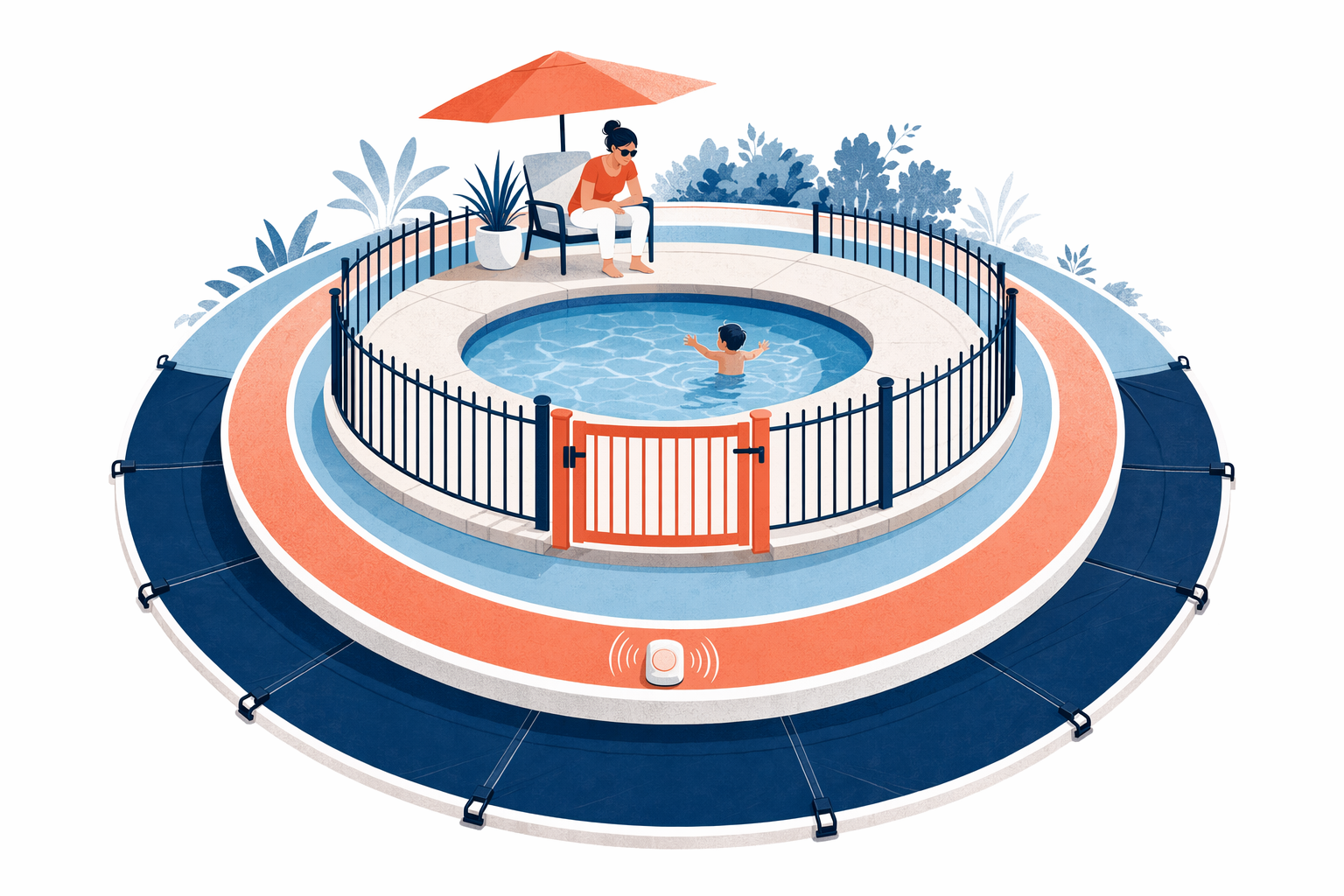
The big idea: use layers of protection
There is no single safety step that makes a pool "safe." The best approach is layers of protection. If one layer fails, another one can still help.
Start with the most important truth: never leave a child unattended near water. Not for a minute. Not to answer the phone. Not to grab a towel. Drowning does not usually look loud or dramatic.
Good pool safety layers often include:
- Constant adult supervision when anyone is in or near the pool
- A 4-sided fence that separates the pool from the house and yard when possible
- Self-closing, self-latching gates with latches placed high and out of a small child's reach
- Door alarms and pool alarms where appropriate
- A secure safety cover made for the pool, used correctly
- Drain-entrapment protection and compliant drain covers
- Clear safety rules for family and guests
- Swimming skills and CPR knowledge for adults in the home
If your pool area is missing one or more of these, fix that soon. Even simple changes can reduce risk. Review your setup at the start of each season and after any repair or renovation. For a broader checklist, see pool safety basics.
What to put around the pool to slow down danger
Physical barriers matter because they buy time. They help stop a child, pet, or confused guest from reaching the water without an adult knowing.
Fences and gates
A fence should fully control access to the pool area. In many homes, the best setup is a fence that separates the pool from the house, not just the property line. Gates should close and latch by themselves every time. Test them often. A gate that stays open "just for today" is a real risk.
Alarms
Alarms can help, but they are a backup, not a substitute for supervision.
- Door alarms can alert you if someone goes from the house toward the pool
- Gate alarms can tell you a gate opened
- Pool surface or underwater alarms may alert when the water is disturbed
Alarms can be useful in homes with children, older adults, or visitors who are not strong swimmers. But they only help if they are installed correctly, powered, and actually turned on.
Safety covers
A proper safety cover can be one more barrier when the pool is not in use. Not every cover is a safety cover. Some covers are mainly for debris or heat retention and may not stop a child from entering the water. Use only the cover type recommended for your pool and keep it secured as designed.
Lighting and visibility
Good lighting around paths, steps, and gates helps at night. Trim plants and remove clutter so the water is easy to see. If you cannot clearly see the pool from your normal sitting area, your setup may need improvement.
If you need help finding a licensed, insured pro for safety-related pool work or repairs, you can get matched at no cost. Verify license and insurance yourself, and get the scope and price in writing before any deposit.
Rules that prevent the most common tragedies
Most pool accidents are tied to a few preventable mistakes. Clear rules help, especially when friends or family visit.
- Pick a water watcher. One adult watches the water only. No phone. No grilling. No drinking. Trade off every 15 to 30 minutes.
- No child swims alone. Even a child who took lessons still needs close adult supervision.
- No running or rough play near the edge. Slips happen fast on wet concrete.
- Keep rescue gear nearby. A reaching pole and life ring should be easy to grab.
- Teach safe entry. No diving into shallow water. Mark depth clearly.
- Lock the pool area when not in use. Do a quick check before bed and before leaving home.
- Keep toys out of the pool after swimming. Toys can attract a child back to the water.
- Learn CPR. If an emergency happens, those first minutes matter.
It also helps to be direct with guests. If someone cannot swim well, say so openly and plan for that. Non-native English speakers, grandparents, babysitters, and teen helpers should all hear the same simple pool rules in words they understand.
For families still learning the basics of pool care, clear water matters too. Murky water makes it harder to see someone in trouble. Read pool water chemistry basics if you want to better understand why visibility and water condition matter.
Drain safety, suction hazards, and equipment risks
Pool safety is not only about falls or unsupervised swimming. Suction entrapment at drains and damaged equipment can also be dangerous.
A swimmer can become trapped by strong suction from a drain or fitting. Hair, jewelry, a swimsuit, or part of the body can get caught. This is why compliant drain covers and the right safety devices matter.
Watch for these issues:
- Cracked, broken, loose, or missing drain covers
- Older equipment with unknown safety compliance
- Strong or unusual suction at drains or skimmers
- Broken suction fittings or missing covers at the pool wall
- Exposed wiring, damaged lights, or equipment that trips breakers
- Loose handrails, damaged ladders, or sharp broken tile
If you see a damaged drain cover or suspect an electrical or suction problem, keep people out of the pool until a qualified pro checks it. PoolSteward does not perform repairs or give electrical, plumbing, or legal advice, but we do encourage owners to hire licensed and insured pool pros and verify that information themselves.
Typical repair costs are estimates only, not quotes. The real price depends on your pool's size and condition, the equipment, the scope of work, and your area. For example, a pool pump replacement may run about $700-$2,500 installed, and a heater repair may run about $150-$700. If you want context on repair pricing, see equipment repair or the broader costs page.
Common mistakes pool owners make
Some safety problems come from habits, not bad intentions. These are common mistakes that lead to close calls.
- Thinking noise will warn you. Drowning is often silent.
- Relying on floaties or toys. They are not a substitute for supervision or a properly fitted life jacket where needed.
- Leaving a gate propped open. Convenience creates risk.
- Assuming older kids will watch younger kids. Children are not a replacement for an alert adult.
- Letting water get cloudy. If you cannot see the bottom clearly, you cannot monitor the pool well.
- Ignoring broken latches, alarms, rails, lights, or drain covers. Small defects become big hazards.
- Storing chemicals carelessly. Store chemicals safely, keep them away from children and pets, never mix chemicals, and always follow label directions. A pro often doses more safely.
- Skipping code questions during upgrades. Fences, gates, covers, alarms, lights, and electrical work may be subject to local safety and building codes.
If you hire help, protect yourself. Hire licensed and insured pros, verify the license and insurance yourself, and get the scope and price in writing before any deposit. PoolSteward is a free matching service for pool owners. You compare options, you choose who to hire, and you control the final payment.
Your next step: walk your pool area today
You do not need to solve every safety issue in one afternoon. But you should start now.
Use this simple walk-around:
- Check every gate and door that can lead to the pool.
- Look at the fence line for gaps or climbable objects nearby.
- Remove toys from the water and deck.
- Make sure rescue gear is visible and easy to reach.
- Check that the water is clear enough to see the bottom.
- Inspect drain covers, ladders, rails, and lights for damage.
- Review household rules with every adult and older child.
- Make a short fix list and handle the highest-risk items first.
If your list includes repairs, drain-cover concerns, lighting issues, deck trip hazards, or a safety-related renovation, you can get matched with licensed, insured pool pros at no cost. Verify credentials yourself, ask what work is included, and get the full scope and price in writing before you pay a deposit.
The main goal is simple: make it harder for someone to reach the water unnoticed, and easier for an adult to respond fast if something goes wrong.
Watch the pool every second a child is near it, lock and alarm the pool area, fix broken gates and drain covers fast, and hire licensed, insured pros for safety-related repairs after you verify their credentials yourself.