Pool equipment explained
Pool equipment can look confusing, but most systems follow the same path: water leaves the pool, gets filtered and treated, then returns clean. Once you know the basic parts, it gets much easier to spot problems early and talk to a pool pro with confidence.
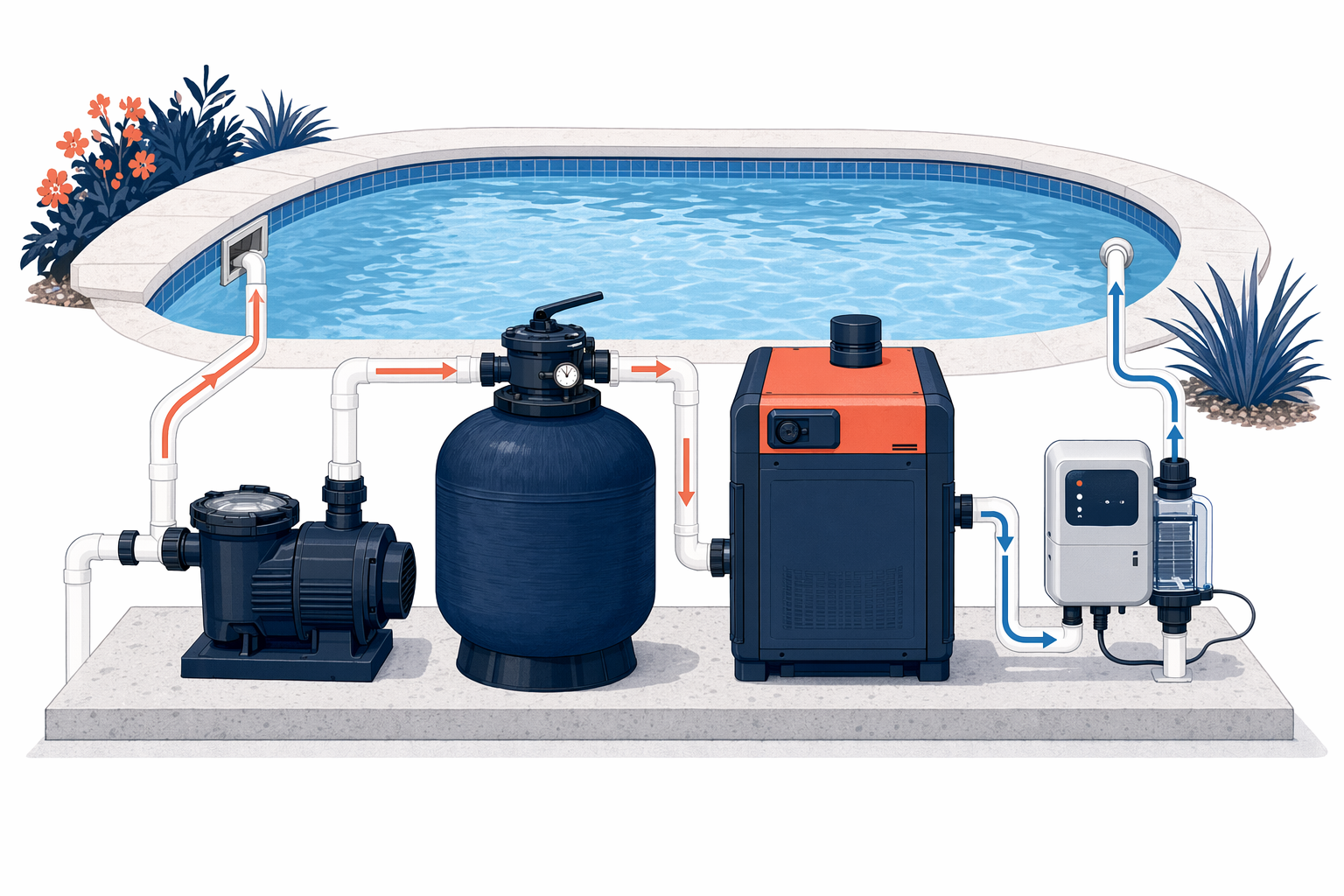
How a pool system works
Think of your pool as a loop.
- Water is pulled from the skimmers and main drain.
- It moves through plumbing to the pump.
- The pump pushes water through the filter.
- Water may then pass through a heater, salt cell, chlorinator, or other treatment equipment.
- Clean water returns to the pool through the return jets.
That simple loop is what keeps water moving, filtered, and sanitary. If one part is weak, the whole system can struggle.
A few terms help:
- Circulation means moving water so dirt can reach the filter and sanitizer can spread.
- Filtration means trapping debris and fine particles.
- Sanitizing means controlling algae, bacteria, and contaminants.
- Automation means timers or controls that turn equipment on and off.
If your water is cloudy, your pressure changes fast, your pump gets loud, or your heater stops working, the problem is often in one of those stages. A good first step is to learn the names of the parts you already have. You can also review pool water chemistry basics so you can separate a water-balance issue from an equipment issue.
The main parts most pool owners should know
You do not need to become a technician. But you should know what each major part does and what failure usually looks like.
- Pump: This is the heart of the system. It pulls water in and pushes it through the equipment. Common warning signs are grinding noise, leaking at the seal, weak flow, air bubbles in the pump lid, or the pump not starting at all. A typical pump replacement often runs about $700-$2,500 installed, but the real price depends on the pump type, horsepower, plumbing fit, electrical setup, and your area.
- Filter: This catches dirt and fine debris. The most common types are cartridge, sand, and DE. A dirty or failing filter can mean cloudy water, weak return flow, or pressure that stays too high or too low.
- Skimmer and pump baskets: These catch leaves and larger debris before they clog the system. If baskets are cracked, missing, or packed full, circulation drops.
- Heater or heat pump: This warms the water. Common issues include ignition problems, sensor faults, scale buildup, corrosion, or bad airflow. A heater repair may be around $150-$700, while replacement is often $2,000-$5,000+ depending on fuel type, size, venting, and local labor.
- Salt cell or chlorinator: This helps sanitize the water. Scale buildup, low salt, flow sensor issues, and worn cells are common. These systems still need testing and adjustment.
- Valves: These direct water flow. If set wrong, they can starve the pump, block skimmers, reduce spa spillover, or confuse where water is going.
- Timer or automation panel: This controls run times and sometimes lights, heaters, and water features. A bad setting can look like an equipment failure when the real issue is just scheduling.
- Lights: Pool and spa lights improve visibility, but water and electricity are a serious combination. If lights flicker, trip breakers, or stop working, hire a licensed and insured pro and verify the license and insurance yourself.
If you want a service company to inspect, diagnose, or repair these parts, PoolSteward can help you get matched with local licensed, insured pool pros at no cost to you.
What normal operation looks like
Many owners only notice equipment when something fails. It helps to know what “normal” looks and sounds like.
Your pump should:
- Prime within a reasonable time after startup
- Run with a steady sound, not screeching or grinding
- Show strong, consistent water movement at the returns
- Have a pump basket that is mostly full of water, not full of air
Your filter should:
- Hold a fairly stable pressure after cleaning
- Rise gradually as it collects debris
- Improve clarity when circulation and chemistry are correct
Your heater should:
- Turn on when called for
- Raise water temperature gradually, not instantly
- Shut off normally without error codes every cycle
Your plumbing and valves should:
- Stay mostly dry at the pad
- Not drip steadily from unions, seals, or valve stems
- Be labeled clearly enough that you know which line feeds what
Your control system should:
- Match the schedule you expect
- Keep the pump running long enough for your pool's needs
- Not show unexplained faults or blank screens
A quick weekly check can prevent expensive surprises:
- Empty skimmer and pump baskets.
- Look for drips or wet spots at the equipment pad.
- Listen for new noises.
- Check filter pressure against the normal baseline.
- Confirm the timer or automation schedule is still correct.
That simple habit catches many problems before they become a bigger repair. If you already use weekly maintenance, ask the company to note pressure readings, visible leaks, and equipment condition on each visit.
What to do when something seems wrong
Do not guess with pool equipment, especially around electricity, gas, or chemicals. But you can gather useful information before you call for help.
Start with safe basics:
- Check whether the breaker is on and whether a GFCI has tripped.
- Make sure baskets are not packed with debris.
- Confirm valves are open in the expected positions.
- Look at the filter gauge and note the reading.
- Check the control panel for error codes.
- Take clear photos of the equipment pad, labels, leaks, and screens.
Then describe the issue in plain words:
- “Pump hums but does not move water.”
- “Filter pressure jumped from 14 psi to 25 psi in two days.”
- “Heater turns on, then shuts off after three minutes.”
- “Water level keeps dropping and the deck near the pad stays wet.”
That makes diagnosis faster.
For likely leaks, hidden plumbing issues, or unexplained water loss, ask about leak detection and repair. Leak detection often costs around $300-$600 as a typical range, but the real price depends on the pool type, access, test method, and your area.
When you hire help:
- Ask if the pro is licensed and insured for the work involved.
- Verify the license and insurance yourself.
- Get the scope of work and price in writing before any deposit.
- Ask whether repair or replacement makes more sense based on age and condition.
- Compare more than one estimate when the job is large.
PoolSteward is a free matching service. We do not repair equipment or handle chemicals. We help you compare local pros so you choose who to hire and you control the final payment.
Common mistakes that cost pool owners money
A lot of pool problems get worse because of small wrong assumptions.
- Replacing parts too quickly: A pump that will not move water is not always “dead.” It may have a suction leak, clogged basket, blocked impeller, bad lid gasket, or closed valve.
- Ignoring small leaks: A slow drip at the pad can damage motors, waste water, and lead to bigger repairs.
- Running with dirty filters too long: This strains circulation and can make heaters, cleaners, and sanitizing systems work poorly.
- Choosing the cheapest fix without checking credentials: Always hire licensed and insured pool pros where required, and verify that yourself.
- Not asking for the full scope in writing: “Pump replacement” may or may not include unions, wiring updates, valve work, programming, or haul-away.
- Trying DIY electrical, gas, or chemical work: Pool systems combine water, electricity, fuel, and sanitizers. That is not a good place to guess.
- Forgetting safety equipment: If you are updating a pool area, think about alarms, self-closing gates, covers, and compliant barriers too. Drowning is fast and silent. Never leave a child unattended near water. Use layers of protection and follow local safety and building codes. See pool safety basics for a simple checklist.
- Overlooking age when deciding to repair: A small repair on very old equipment may buy little time. Ask the pro to explain remaining life, efficiency, and warranty differences.
If you are facing several old components at once, it may help to compare repair versus broader updates through equipment repair.
Your next step as a pool owner
You do not need to memorize every valve and fitting. You just need a simple system.
- Learn the names of the parts at your equipment pad.
- Keep a note of normal filter pressure, pump sound, and run schedule.
- Take photos of model numbers before something breaks.
- Do not ignore noise, leaks, air bubbles, or recurring cloudy water.
- Bring in a licensed, insured pro when the issue involves electrical, gas, plumbing beyond basic observation, major leaks, or repeated equipment faults.
If a major project is coming, such as surface failure or a full equipment refresh during a remodel, compare the total scope carefully. Resurfacing or replastering can often run about $5,000-$20,000+ as a typical range, depending on pool size, finish, prep work, and your area.
Pool ownership gets easier when you stop reacting and start tracking. Know what you have. Notice changes early. Get written estimates. Compare your options. Then hire the pro that makes the most sense for your pool and your budget.
Learn what your pump, filter, heater, chlorinator, valves, and controls do, watch for changes in noise, pressure, leaks, and water flow, and call a licensed and insured pool pro for anything involving electrical, gas, major leaks, or repeated equipment problems.