Pool water chemistry made simple
Good pool water is about balance, not magic. You do not need to be a chemist, but you do need a simple routine so the water stays clear, equipment lasts longer, and swimmers are safer.
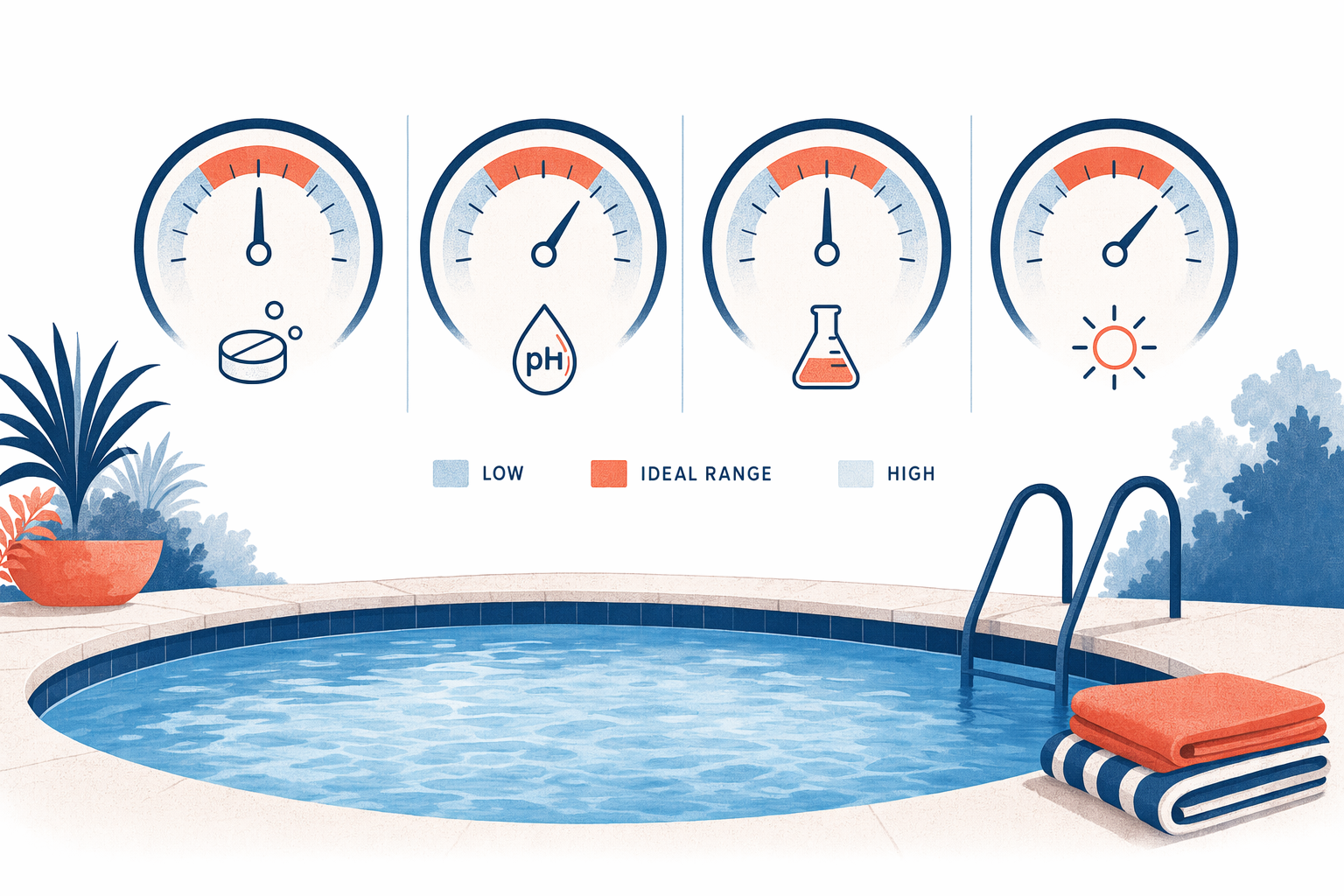
What pool chemistry really does
Pool chemistry has three jobs: kill germs, protect surfaces and equipment, and keep the water comfortable. When one part gets out of line, other problems follow fast. Cloudy water, algae, burning eyes, scale on tile, stained plaster, and worn-out equipment often start with basic chemistry drifting too far.
For most pool owners, the main numbers are:
- Free chlorine: your main sanitizer in many pools
- pH: how acidic or basic the water is
- Total alkalinity: helps keep pH from swinging too fast
- Calcium hardness: important for plaster and scale control
- Cyanuric acid (stabilizer): helps protect chlorine from sunlight in outdoor pools
A good way to think about it: chlorine does the sanitizing, pH affects how well chlorine works, alkalinity helps stabilize pH, calcium affects surfaces and scale, and stabilizer helps outdoor chlorine last longer.
If the pool is turning green, staying cloudy, or eating through parts, chemistry may not be the only issue. Circulation, filtration, run time, weather, and bather load matter too. If you want help from a local pro, PoolSteward can help you get matched for free.
The core numbers most owners should watch
You do not need to chase tiny changes every day. But you should know the typical target ranges many pool pros use as a starting point. Exact targets can vary by pool type, finish, sanitizer system, and local conditions.
- Free chlorine: often around 1-3 ppm for many residential pools, sometimes higher depending on stabilizer level and local guidance.
- pH: commonly 7.2-7.8.
- Total alkalinity: often about 80-120 ppm.
- Calcium hardness: often around 200-400 ppm for many plaster pools. Some surfaces and systems may call for different levels.
- Cyanuric acid: often around 30-50 ppm in many outdoor chlorine pools, though some pools may run differently.
Why these matter in plain English:
- Low chlorine can let algae and germs get ahead.
- High chlorine can be harsh and still may not solve the real issue if pH or stabilizer is off.
- Low pH can make water more corrosive. Metal parts, heaters, and surfaces can suffer.
- High pH can lead to scale, cloudy water, and less effective chlorine.
- Low alkalinity means pH can bounce around.
- High alkalinity can make pH hard to move and can contribute to cloudiness or scale.
- Low calcium can be hard on some plaster finishes.
- High calcium can leave scale on tile, walls, salt cells, and heaters.
- Too much stabilizer can make chlorine less effective and lead to stubborn water problems.
If these terms still feel confusing, start with the basics and keep records. A simple log beats guessing. You can also read more in pool equipment explained if you are not sure how the pump and filter affect water quality.
A simple routine that works for many pool owners
A steady routine is better than random chemical dumping. Here is a practical plan many owners can follow.
Every 2-3 days in hot weather, or at least weekly in milder periods:
- Test free chlorine and pH.
- Empty skimmer baskets.
- Look at the water. Clear? Cloudy? Green tint? Strong odor?
- Check that the pump is running normally and there are no leaks.
Weekly:
- Brush walls and steps.
- Vacuum or run your cleaner.
- Test alkalinity.
- Clean the filter if pressure is high or flow is weak, based on the manufacturer guidance.
Monthly or as needed:
- Test calcium hardness and stabilizer.
- Inspect tile line, plaster, ladders, and equipment pad for scale, rust, drips, or strange sounds.
When you add chemicals:
1. Read the label and follow it.
2. Add only what the product says for your pool size.
3. Let the water circulate before retesting.
4. Make one change at a time when possible so you know what worked.
Important safety points:
- Never mix pool chemicals.
- Store chemicals dry, locked up, and away from children and pets.
- Keep products in their original containers.
- If you are unsure, a licensed, insured pool pro often doses more safely.
Many owners decide the time savings are worth hiring out testing and balancing. Typical weekly pool maintenance often runs about $30-$90 per visit or roughly $100-$350 per month, but the real price depends on your pool's size and condition, the equipment, the scope of work, and your area. If you want to compare options, start with weekly maintenance or see broader costs.
Common chemistry mistakes that cost owners money
Most expensive pool chemistry mistakes are not dramatic. They are small habits that add up.
- Adding chemicals without testing first. Guessing can push one number way up while leaving the real problem untouched.
- Chasing pH every few hours. Water needs time to circulate. Constant correction can create bigger swings.
- Using too many products at once. Clarifier, shock, algaecide, phosphate remover, and more can turn into a mess if the root cause is poor sanitation or filtration.
- Ignoring stabilizer. Outdoor pools can burn through chlorine in strong sun, but too much stabilizer can also weaken chlorine performance.
- Not brushing and cleaning. Chemistry alone does not remove dirt, biofilm, or algae clinging to surfaces.
- Forgetting the filter. A dirty or failing filter can make chemistry look worse than it is.
- Letting small scale or staining continue. Early signs are easier and cheaper to fix than heavy buildup.
- Assuming "strong chlorine smell" means too much chlorine. Often it means water balance is off and combined chloramines are a problem.
Another expensive mistake is missing a hidden leak or failing equipment problem. If you keep adding water or chemicals and the pool still will not hold balance, it may be more than chemistry. Typical leak detection often runs about $300-$600, and equipment repairs vary widely. If your pump, filter, or heater may be part of the issue, read about equipment repair.
What to do when the water looks bad
You do not need a perfect diagnosis on day one. Start with a calm checklist.
If the water is cloudy:
1. Test chlorine and pH.
2. Check the filter and circulation.
3. Brush the pool.
4. Clean baskets and backwash or clean the filter if needed.
5. Retest after circulation.
If the water is green:
1. Test first.
2. Remove leaves and debris.
3. Brush walls and floor.
4. Make sure the pump and filter are working.
5. If the problem is advanced, a licensed, insured pro may be the safer route.
If the pH keeps drifting or scale keeps coming back:
- Test alkalinity and calcium too.
- Look at fill water quality.
- Check for high evaporation and refill cycles.
- Consider whether a pro should inspect the system.
If your eyes burn or swimmers complain:
- Do not assume more chlorine is the answer.
- Test the water.
- Check pH first.
- Improve circulation and filtration.
Water problems can also point to an aging surface. Rough plaster, staining, or persistent discoloration may mean the finish is part of the issue. Typical resurfacing or replastering often ranges around $5,000-$20,000+, depending on pool size, finish, condition, and area. If your pool is older, see resurfacing and renovation.
When to call a pro, and how to hire smart
DIY testing is fine for many owners. But there are times when bringing in help makes sense.
Call a licensed, insured pool pro if:
- The water will not clear after basic testing, cleaning, and filtration checks
- You suspect a leak
- The pump, filter, heater, salt system, or automation is acting up
- Scale, staining, or plaster damage is getting worse
- You are uncomfortable handling chemicals
- You want a weekly service plan and written scope
PoolSteward is a free matching service. We do not service pools or give jobsite chemical, electrical, plumbing, or legal advice. We help you compare local pros. You compare quotes, you choose who to hire, and you hold the final payment.
Before you hire anyone:
- Verify the license and insurance yourself
- Get the scope of work and price in writing before any deposit
- Ask exactly what testing, chemicals, cleaning, and equipment checks are included
- Ask what is extra
And do not separate chemistry from safety. Drowning is fast and silent. Never leave a child unattended near water. Use layers of protection: fences, self-closing gates, alarms, covers, and close supervision. Follow local safety and building codes. For a refresher, read pool safety basics and vet a pool service company.
Test your pool water on a schedule, focus on chlorine and pH first, do not dump in chemicals without testing, and call a licensed, insured pro if the water will not clear or equipment may be part of the problem.