Pool resurfacing & renovation
If your pool surface feels rough, stains keep coming back, or you are losing water and patch jobs do not last, resurfacing may be the next step. Renovation can also update old tile, coping, lights, and safety features on a pool you already own.
What resurfacing and renovation mean
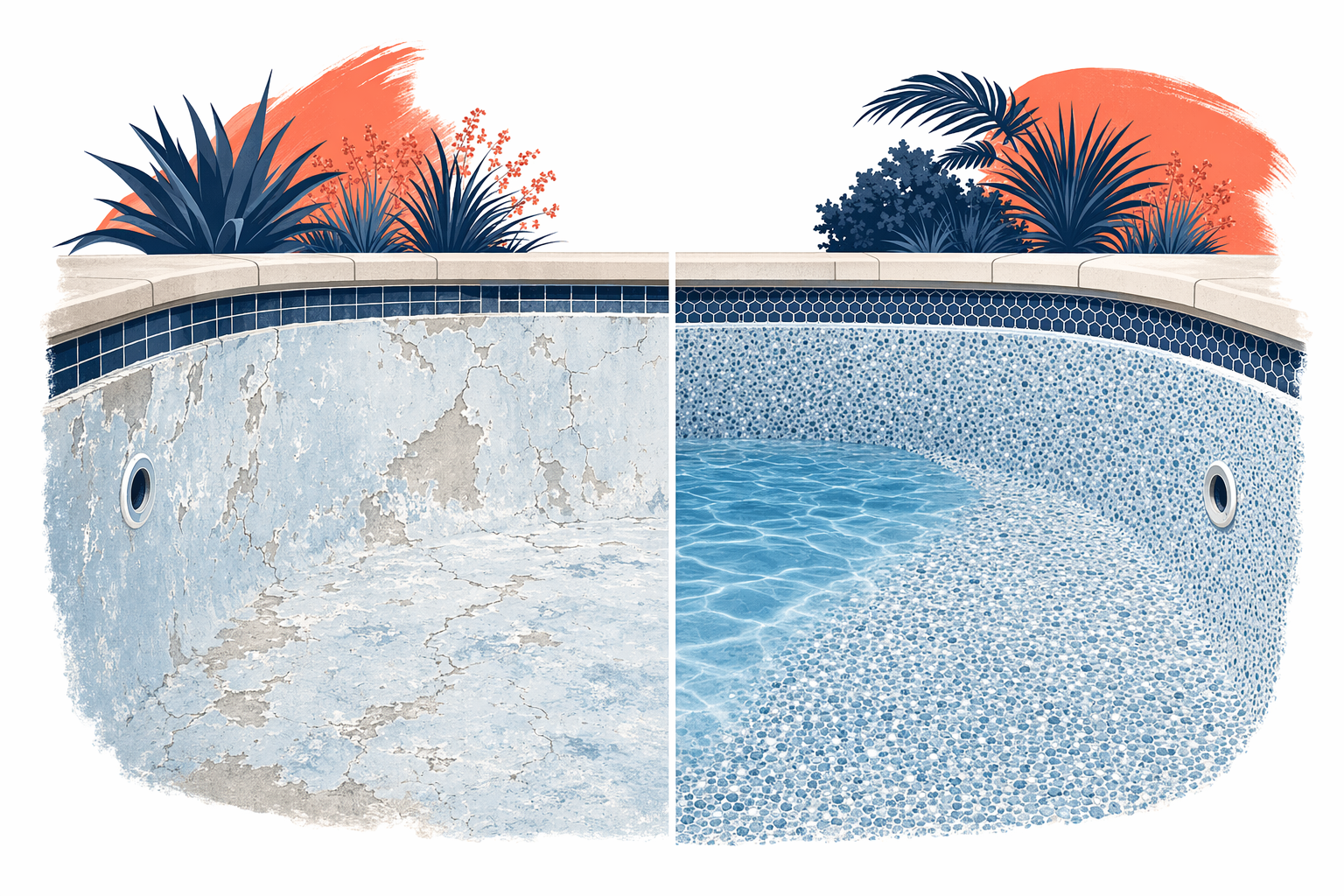
Resurfacing means removing or preparing the worn interior finish of an existing pool and applying a new finish. On a plaster pool, that may mean new white plaster, quartz, or pebble-style material. On other pools, the work can include patching, coating, liner-related updates, or repairs tied to the surface system already in place.
Renovation is broader. It can include resurfacing plus tile replacement, coping repair, skimmer work, step repair, light niche updates, handrails, drains, autofill parts, and other improvements to an older pool.
Common signs it may be time:
- The finish is rough on feet, hands, or swimsuits
- Stains no longer brush off or quickly return
- You see cracks, delamination, hollow spots, or flaking
- The waterline tile is loose or falling off
- The pool loses water and surface or structural issues are suspected
- The pool looks dated and you want a safer, easier-to-maintain setup
Not every ugly pool needs full resurfacing right away. Sometimes the real problem is water chemistry, neglected maintenance, or a hidden leak. If you are not sure, start by learning the basics of pool water chemistry and ask a licensed, insured pro to inspect the pool in person.
How the job usually works
Every pool is different, but most resurfacing jobs follow the same basic path:
- Inspection and scope. A pro checks the shell, existing finish, tile line, fittings, lights, drains, and visible equipment. This is when hidden repairs often show up.
- Drain and prep. The pool is drained, then the old surface is chipped out, sanded, or otherwise prepared so the new finish can bond correctly.
- Repairs before finish. Cracks, hollow areas, bond beam issues, loose tile, step damage, and some plumbing or skimmer problems may be repaired before the new surface goes on.
- New finish application. The crew installs the selected finish and may also replace tile or coping if that is part of the project.
- Fill and startup. The pool is refilled and the startup process begins. This part matters. New surfaces often need careful brushing and chemistry balancing in the first days and weeks.
Ask who handles each part of the work and what is included. For example, does the scope include tile, debris haul-away, startup chemicals, acid wash, light replacement, or permit-related items if your area requires them for certain upgrades? Get the full scope and price in writing before any deposit.
If the pool also has aging pumps, filters, heaters, or automation, you may want to review equipment basics before comparing bids.
Typical cost ranges
For most homeowners, pool resurfacing or replastering typically runs about $5,000-$20,000+. Renovation projects can go higher when they include tile, coping, lighting, deck work, major repairs, or premium finishes.
A few honest cost notes:
- A small, simple pool with basic plaster and limited prep may land near the lower end.
- A larger pool, premium finish, difficult access, heavy prep, or structural repairs can push the total far higher.
- Tile replacement, coping work, skimmer repair, drain updates, and light niche issues often add cost.
- If a leak is suspected, separate testing or repair may be needed first. Typical leak detection and repair costs vary by the issue.
Typical examples, not quotes:
- Basic replaster on a straightforward pool: often somewhere in the lower to middle part of the range
- Quartz or pebble-style finishes: often more than standard plaster
- Add new tile line or coping: usually increases labor and material cost
- Add equipment updates at the same time: can be efficient, but raises the total project cost
The real price depends on pool size and condition, finish type, equipment and related repairs, scope of work, and your area. That is why it helps to compare more than one written estimate. You can start with cost guides and then use free matching to hear from licensed, insured local pros.
Timeline and what can delay the job
A straightforward resurfacing project may take several days to around two weeks, depending on prep, repairs, finish choice, weather, crew availability, curing needs, and inspection timing where required. Larger renovations can take longer.
What often causes delays:
- Rain, cold snaps, or very high heat
- Hidden damage found after the pool is drained
- Tile, coping, or special-order finish materials not in stock
- Deck access problems for equipment and debris removal
- Waiting on inspections for parts of the project in some areas
Ask these timeline questions before you hire:
- When can work start?
- How many days will the pool be unusable?
- What could change the timeline?
- Who manages startup after refill?
- What should I do, and not do, during curing?
Do not plan a big party around the earliest possible finish date. Build in extra time. And if you have children, remember that drowning is fast and silent. During renovation, barriers may be open or equipment may be around the yard. Never leave a child unattended near water. Use layers of protection such as fences, self-closing gates, alarms, covers, and close supervision. Follow local safety and building codes. More here: pool safety basics.
Pros, cons, and when renovation is worth it
Resurfacing can be money well spent, but it is not a small project. Be honest about the pool's condition and how long you plan to keep the home.
Pros
- Smoother, cleaner-looking surface
- Can reduce places where algae and stains hang on
- May improve comfort on feet and hands
- Lets you fix multiple aging issues in one project
- Can modernize the look and add safety upgrades
Cons
- Significant cost
- The pool is out of service during the job
- Hidden damage may increase the final total if approved change work is needed
- New surfaces still need proper water chemistry and maintenance
Renovation often makes sense when:
- You are doing repeated patch repairs that do not last
- The finish is near the end of its service life
- Tile, coping, steps, or fittings are also failing
- You want to update lights, rails, drains, or other safety-related items while the pool is already being worked on
If the pool only looks dull, do not jump straight to a full renovation. An inspection and better ongoing care may buy time. Good weekly maintenance and proper chemistry can help protect the finish you already have.
What to ask before you sign
Use these questions to compare bids on equal terms:
- What exact surface material are you proposing? Basic plaster, quartz, pebble-style, or something else?
- What prep is included? Full chip-out, bond coat, crack repair, patching, tile prep?
- What is excluded? Water for refill, startup visits, chemistry, permits for related upgrades, debris haul-away, deck repair?
- What happens if you find hidden damage after draining? How are change orders approved and priced?
- How long is the expected timeline? What weather delays are likely in my area?
- Who applies startup chemicals and gives care instructions? Follow label directions, store chemicals safely, and never mix chemicals. A pro often doses more safely.
- Are you licensed and insured for this kind of work? Ask for the license number and proof of insurance.
- Can you give me the scope and payment schedule in writing before any deposit?
A low bid is not always the best value. One company may include crack repair, startup, and tile reset, while another may not. Compare the actual scope, not just the total number.
How to vet a resurfacing pro
PoolSteward does not do the work. We help you get matched, at no cost, with pros so you can compare options and choose who to hire.
Before you sign with anyone:
- Hire licensed and insured pool pros where your state or local rules require it
- Verify the license and insurance yourself
- Check that the written scope matches what you discussed
- Make sure the finish type, prep method, timeline, warranty terms, and payment schedule are written down
- Do not hand over final payment until the agreed work is complete
A few practical tips:
- Ask how many resurfacing projects like yours they do each year
- Ask who will actually be on site: employees, subcontractors, or both
- Ask for care instructions for the first 30 days in plain language
- Keep all change orders in writing
If you want help starting the process, use PoolSteward's free matching service. Participating pros pay a flat fee to be listed and contacted. The matching is free to you, and you compare quotes, you choose who to hire, and you hold the final payment. For a deeper checklist, see how to vet a pool service company.
If your pool finish is rough, cracked, stained, or failing, resurfacing may fix it, but it is a real project with real cost. Get written estimates from licensed, insured pros, verify their license and insurance yourself, compare the exact scope, and do not pay the final amount until the work is done as agreed.