Leak detection & repair
If your pool is losing water faster than normal, a leak may be the reason. PoolSteward helps you compare local **licensed, insured** pool pros for leak detection and repair at **no cost** to you.
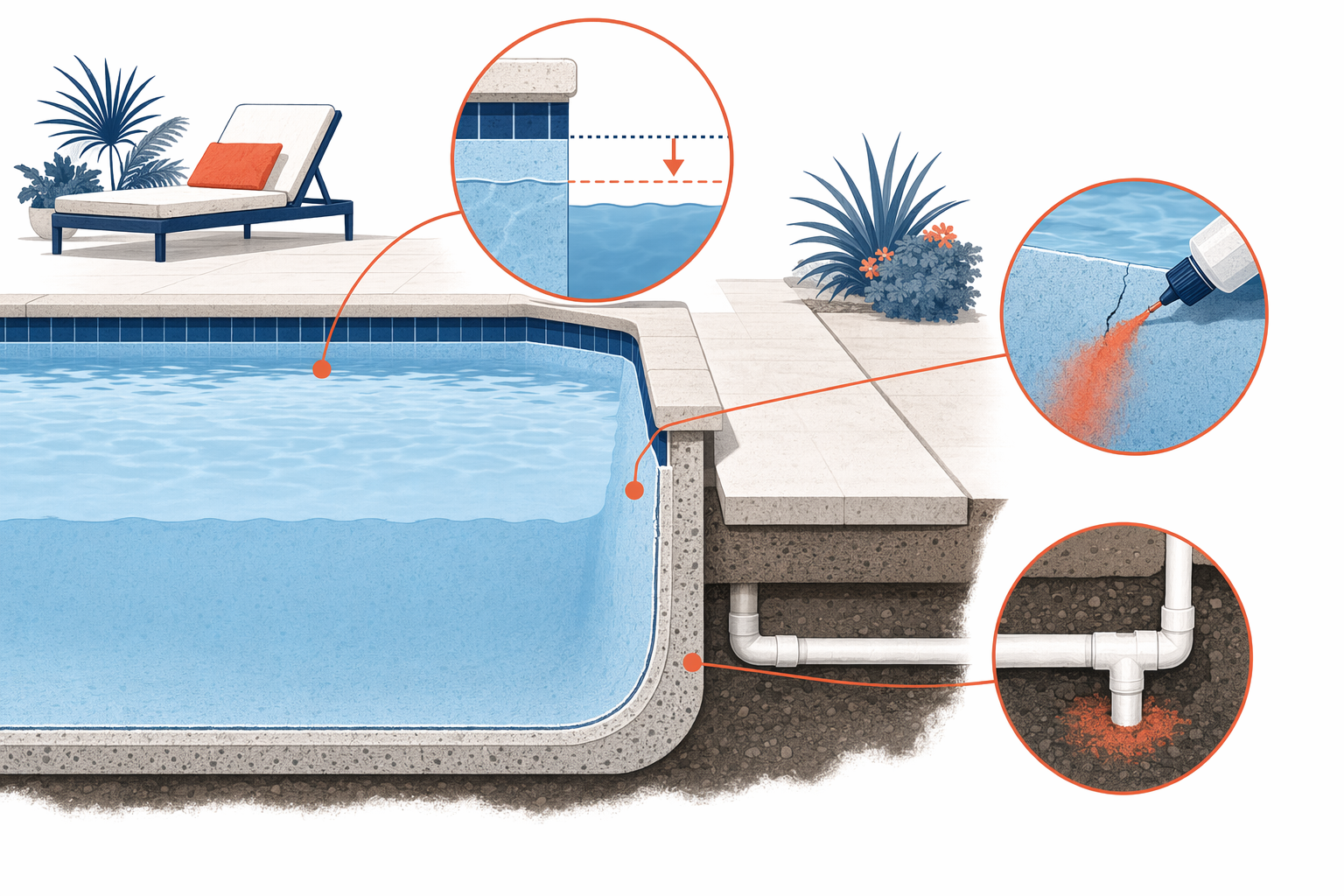
How to tell if your pool may have a leak
All pools lose some water from evaporation, splash-out, and backwashing. But if the level keeps dropping faster than usual, it is smart to have it checked.
Common signs of a possible leak:
- You add water often, sometimes every few days
- The water level drops even when the weather is mild
- Wet soil, soft spots, or sinkage around the pool or equipment pad
- Air bubbles in the return lines or trouble keeping the pump primed
- Cracks, loose tiles, or separated coping
- Higher water bills with no other clear cause
- Algae or chemistry problems that keep coming back because fresh fill water changes balance
A simple first check is the bucket test. Put a bucket of pool water on a step so the bucket water level matches the pool water level outside the bucket. Mark both levels. Wait 24 hours with the pump off if possible. If the pool loses more water than the bucket, that points to a leak.
If you are not sure what equipment could be involved, this quick guide to pool equipment explained can help you understand the basic parts before you speak with a pro.
Where pool leaks usually happen
A leak is not always in the shell. It can be in the plumbing, fittings, equipment, or finish.
Typical leak locations include:
1. Skimmer cracks or separation where the skimmer meets the pool wall
2. Return fittings and main drain fittings
3. Underground plumbing lines on the suction or return side
4. Pump, filter, heater, valves, and unions at the equipment pad
5. Light niches, conduits, and fittings
6. Vinyl liner tears or punctures
7. Gunite/plaster cracks or worn finish areas
8. Tile line and beam cracks near the top of the pool
The repair depends on the cause. A bad union or valve may be a fairly small fix. A broken underground line, damaged skimmer throat, or structural crack can be much more involved.
That is why it helps to hire a pro who does both detection and repair or can clearly explain what they found and who should do the next step. If you want to compare options, you can start here: Get matched.
How leak detection usually works
Good leak detection is a process, not a guess. A careful pro will try to confirm whether there is a leak, where it is, and what repair makes sense.
A typical visit may include:
- Asking how fast the pool loses water and whether it changes with the pump on or off
- Checking the pool shell, skimmer, tile line, fittings, lights, and equipment pad
- Pressure testing plumbing lines
- Dye testing around fittings or visible cracks
- Listening equipment or other specialty tools for underground plumbing leaks
- Inspecting the liner or finish for damage
What you can do before the appointment:
- Note how much water you add and how often
- Mark the water line and take photos over 24-48 hours
- Tell the pro whether the leak seems worse with the pump running
- Clear access to the equipment pad and pool edge
A trustworthy pro should explain what they tested, what they found, and what is still uncertain. Ask for the repair scope and price range in writing before any deposit.
PoolSteward is a free matching service. We do not perform leak tests or repairs ourselves. We help you connect with local pros so you can compare the scope, timing, and estimated cost.
Typical leak detection and repair costs
For most owners, the first question is cost. The honest answer is that the real price depends on the pool's size and condition, the equipment, the scope of work, and your area.
Typical ranges:
- Leak detection: about $300-$600 for a standard visit and testing
- Simple equipment-pad or fitting repair: sometimes $150-$700+ depending on the part and labor
- Skimmer or return fitting repair: often a few hundred dollars to over $1,500+ if concrete or decking access is needed
- Underground plumbing repair: can range from $500 to $2,500+ depending on how hard the line is to reach and repair
- Vinyl liner patch: sometimes modest if the issue is small and easy to reach; major liner damage can cost much more if replacement is needed
- Shell crack or finish-related repair: varies widely; more significant work can lead into larger renovation costs
If the leak is tied to aging finish, hollow spots, major cracking, or worn plaster, the long-term fix may be resurfacing rather than a spot patch. In that case, this guide on resurfacing & renovation may help with the bigger picture.
A low detection price is not always the best value if the company cannot explain the findings. On the other hand, the highest price does not guarantee better work. Compare:
- What tests are included
- Whether repair is included or separate
- Whether decking, concrete, or tile work is extra
- Warranty terms on the repair itself
- Whether the estimate says diagnosis only or diagnosis plus repair
For broader pricing context across common pool work, see costs.
How long it takes and what can delay the job
Many leak detection visits take 1-3 hours on site. Some repairs can be done the same day. Others need a return visit, special parts, or help from another trade.
A realistic timeline often looks like this:
1. Booking: a few days to a couple of weeks in busy season
2. Detection visit: same day results for many issues, but not all
3. Written scope: later that day or within 1-2 business days
4. Repair scheduling: a few days to a few weeks depending on parts and workload
5. Follow-up test: sometimes needed after repair
Things that can extend the timeline:
- The leak is underground and hard to pinpoint
- More than one leak exists
- Concrete, pavers, or landscaping must be opened
- The pool must be lowered or partly drained
- Special-order parts are needed
- Weather delays access or repair materials
Do not let a pool sit with a known leak for too long. Water loss can damage equipment, wash out soil, and in some cases make a bigger repair more likely.
If you also need help keeping chemistry stable while you sort out the leak, a pro who handles weekly maintenance may help keep the pool usable until the repair is complete.
Pros, cons, and when it is worth calling a pro
Sometimes owners wait because they hope water loss is just heat or splash-out. That can be expensive if the real issue is a line break or skimmer crack.
Why calling a pro can make sense
- Leak detection tools can save time compared with guessing
- A pro can tell the difference between evaporation and actual water loss
- Early repair may prevent soil erosion, deck movement, or equipment damage
- Some repairs need specialized materials or pressure testing
Possible downsides
- Detection has a cost even before repair begins
- Not every leak is found on the first visit
- Older pools may reveal bigger problems once testing starts
It is usually worth scheduling a visit if:
- You add water more than expected week after week
- The pool loses more water than the bucket test shows
- You see wet spots near the pool or equipment
- The pump struggles to hold prime
- The water level keeps dropping to the same point
For chemistry and chemical handling, be careful. Store pool chemicals safely, never mix chemicals, and follow label directions. A qualified pro often doses more safely than a rushed homeowner. For a basic overview, see pool water chemistry basics.
What to ask before you hire
You do not need to be an expert. You just need to ask clear questions and get clear answers.
Ask each company:
- Are you licensed and insured for this work in my area?
- Have you worked on my pool type before: gunite, fiberglass, or vinyl liner?
- What leak detection tests are included in your price?
- Is the price for detection only or detection plus repair?
- If you find more than one issue, how will you price additional work?
- Will you pressure test the lines?
- If decking or concrete must be opened, who does that work?
- What warranty do you offer on the repair?
- Will you give me the scope and estimated price in writing before any deposit?
Important protections for you:
- Verify the license and insurance yourself
- Read the written scope carefully
- Make sure the estimate lists what is included and what is not
- Do not rely on verbal promises
- Hold final payment until the agreed work is complete
If you want help comparing local companies, PoolSteward can match you with pros at no cost. Participating pros pay a flat fee to be included. You compare options and choose who to hire.
For a full checklist, read how to vet a pool service company.
One more thing: pool safety still matters during repairs. Drowning is fast and silent. Never leave a child unattended near water. Use layers of protection like fences, self-closing gates, alarms, covers, and close supervision, and follow local safety and building codes.
If your pool keeps losing water, do a bucket test, take notes, and get a licensed, insured pool pro to check it before the problem gets bigger. PoolSteward can help you compare local leak detection and repair pros for free, and you choose who to hire.