Salt vs chlorine pools
Both salt pools and traditional chlorine pools use chlorine to keep water sanitary. The real difference is how that chlorine gets into the water, what equipment you maintain, and what ongoing costs and repair issues you should expect.
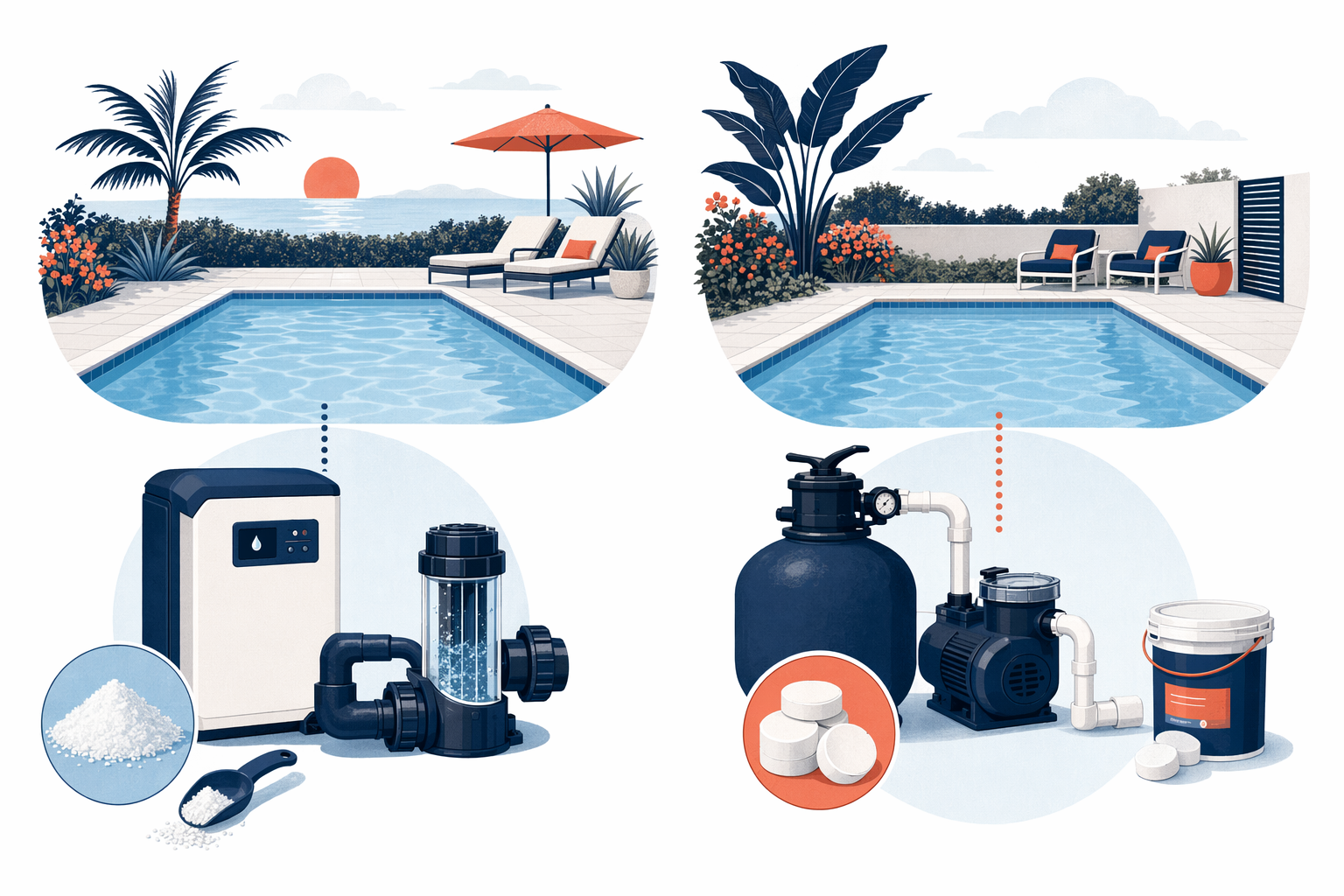
The short truth: salt is not chlorine-free
A lot of pool owners hear "salt pool" and think "no chlorine." That is not how it works. A salt pool uses a salt chlorine generator, also called a salt cell, to turn dissolved salt in the water into chlorine. A traditional chlorine pool gets chlorine from tablets, liquid chlorine, or granular products.
So the choice is usually not chlorine or no chlorine. It is manually adding chlorine versus having a system make chlorine from salt.
For an existing pool owner, that matters because the day-to-day experience can feel different:
- Salt pool: softer-feeling water for many swimmers, less handling of chlorine products, but more equipment to maintain
- Traditional chlorine pool: simpler equipment setup, often lower upfront conversion cost, but more hands-on chemical adding and watching tablet use
Either type can be clear and comfortable. Either type can also turn green if chemistry is off, circulation is poor, or maintenance gets skipped. If you want help understanding the upkeep side first, see pool water chemistry basics.
How they compare in real pool-owner life
Here is the practical comparison most homeowners care about.
1. Daily and weekly upkeep
A salt system can reduce how often you add chlorine by hand, but it does not make the pool maintenance-free. You still need testing, brushing, skimming, filter cleaning, and chemistry adjustment. pH often drifts high in salt pools, so owners commonly need acid added on a regular basis.
Traditional chlorine pools need steady sanitizer added manually or through a feeder. That can mean more active chemical management, especially in hot weather, after storms, or after heavy pool use.
2. Water feel and swimmer comfort
Many people say salt pools feel smoother on skin and eyes. Some of that is real. Some is because a well-balanced pool of any type feels better than a poorly balanced one. A balanced traditional chlorine pool should not smell harsh or burn eyes.
3. Equipment and repair risk
A salt pool adds a salt cell and control system. That means another expensive part that can fail or wear out. Salt can also be hard on some metals, stone, and nearby surfaces if the pool chemistry is not managed well.
A traditional chlorine pool has fewer specialized parts, but you may still face the same common repair issues any pool has: pump, filter, heater, leaks, automation, lights, and worn surfaces. If you are sorting out aging equipment, pool equipment explained can help you ask better questions.
4. Cost pattern
Salt systems often cost more upfront or during conversion, then may reduce some ongoing chemical handling. Traditional chlorine setups can be simpler at the start, but chemical costs and labor can add up over time. The right answer depends on how much you want to do yourself and the condition of your current equipment.
For many owners, the smartest question is not "Which is better?" It is "Which is a better fit for my existing pool, my budget, and how much upkeep I can actually stay on top of?"
Typical costs and where the money really goes
There is no one-size-fits-all answer because real cost depends on the pool's size and condition, the equipment, the scope of work, and your area. But these are typical ranges, not quotes.
For a pool you already own, your costs usually fall into these buckets:
- Weekly maintenance: about $30-$90 per visit or $100-$350 per month
- Pump replacement: about $700-$2,500 installed
- Heater repair: about $150-$700
- Heater replacement: about $2,000-$5,000+
- Leak detection: about $300-$600
- Resurfacing or replastering: about $5,000-$20,000+
For a salt pool specifically, owners should also plan for:
- periodic salt cell cleaning if scale builds up
- eventual salt cell replacement when it wears out
- possible repairs to the control board or related electrical components
- occasional correction of high pH and scale-related problems
For a traditional chlorine pool, common spending points include:
- tablets, liquid chlorine, shock, stabilizer, and balancing chemicals
- feeder or chlorinator maintenance
- extra labor if chlorine demand swings a lot in summer
If a contractor is trying to sell you on one system by promising huge savings without seeing your pool, be careful. Ask what parts are included, how old your current equipment is, and what maintenance the new setup will actually need. You can review broader pool service and repair costs before you compare bids.
What to do if you already have a pool and want to choose wisely
If you are deciding between staying with chlorine or converting an existing pool to salt, use this simple process.
1. Start with your current pool condition.
Look at the age of your pump, filter, heater, plumbing, and surface. If the pool already has major repair needs, adding a salt system may not be the first money to spend.
2. Think about your real maintenance habits.
If you travel a lot or do not want to handle chlorine products often, a salt system may be appealing. If you are comfortable testing and dosing regularly, traditional chlorine may be just fine.
3. Ask about materials compatibility.
Some stone, metal components, handrails, and nearby decking can be more sensitive if water chemistry is neglected. Ask a licensed and insured pool pro to explain any risks for your specific pool.
4. Get the scope in writing.
If you are converting to salt, ask exactly what is included: salt cell, controller, plumbing changes, electrical work if needed, startup, owner instructions, and any warranty details. Verify the pro's license and insurance yourself.
5. Compare more than one option.
A good pro should be able to tell you whether your money is better spent on sanitizing equipment, leak repair, circulation upgrades, or surface work first. With PoolSteward, you can get matched with licensed, insured pool pros and compare your options at no cost.
Remember: you compare the written scope, you choose who to hire, and you hold the final payment until the agreed work is done.
Common mistakes pool owners make
These are the errors that cause a lot of frustration and extra cost.
- Thinking a salt pool needs no chlorine testing. It still makes chlorine, and the water still needs regular testing and balancing.
- Ignoring pH and scale. Salt pools often run toward high pH. If scale forms on the cell, performance drops and cleaning becomes more frequent.
- Using too many tablets in a traditional chlorine pool. That can push stabilizer too high and make the chlorine less effective.
- Choosing based only on sales talk. The best setup depends on your pool's age, finish, equipment, and local climate.
- Skipping written details. Always get price, scope, materials, and who handles each part in writing before any deposit.
- Hiring unverified help. Always hire licensed and insured pool pros and verify that yourself.
And always keep safety first. Drowning is fast and silent. Never leave a child unattended near water. Use layers of protection like fences, self-closing gates, alarms, covers, and active supervision. Follow local safety and building codes. If you store pool chemicals, store them safely, never mix chemicals, and follow label directions. A trained pro often handles dosing more safely. For a quick refresher, review pool safety basics.
Next step: decide based on your pool, not the label
Salt and chlorine pools can both work well. A salt pool may feel easier day to day for some owners, but it adds equipment and its own repair cycle. A traditional chlorine pool may be simpler mechanically, but it often needs more hands-on chemical management.
If your pool already has issues like weak circulation, a failing pump, heater trouble, leaks, staining, or an aging surface, fix the big problems first. Clean, balanced water starts with the whole system working together.
If you want help comparing maintenance or repair options for your existing pool, PoolSteward can help you get matched with licensed, insured pros. You can also learn more about weekly pool maintenance if your main goal is steady care, not a system change.
Salt pools still use chlorine. The main difference is whether your pool makes chlorine from salt or you add chlorine yourself. Compare upkeep, equipment age, repair risk, and written costs for your existing pool before you decide.