Safety upgrades & code compliance
If you already own a pool, safety upgrades are some of the most important money you can spend. The goal is simple: reduce risk, meet local rules, and make it harder for a child to reach the water without an adult knowing.
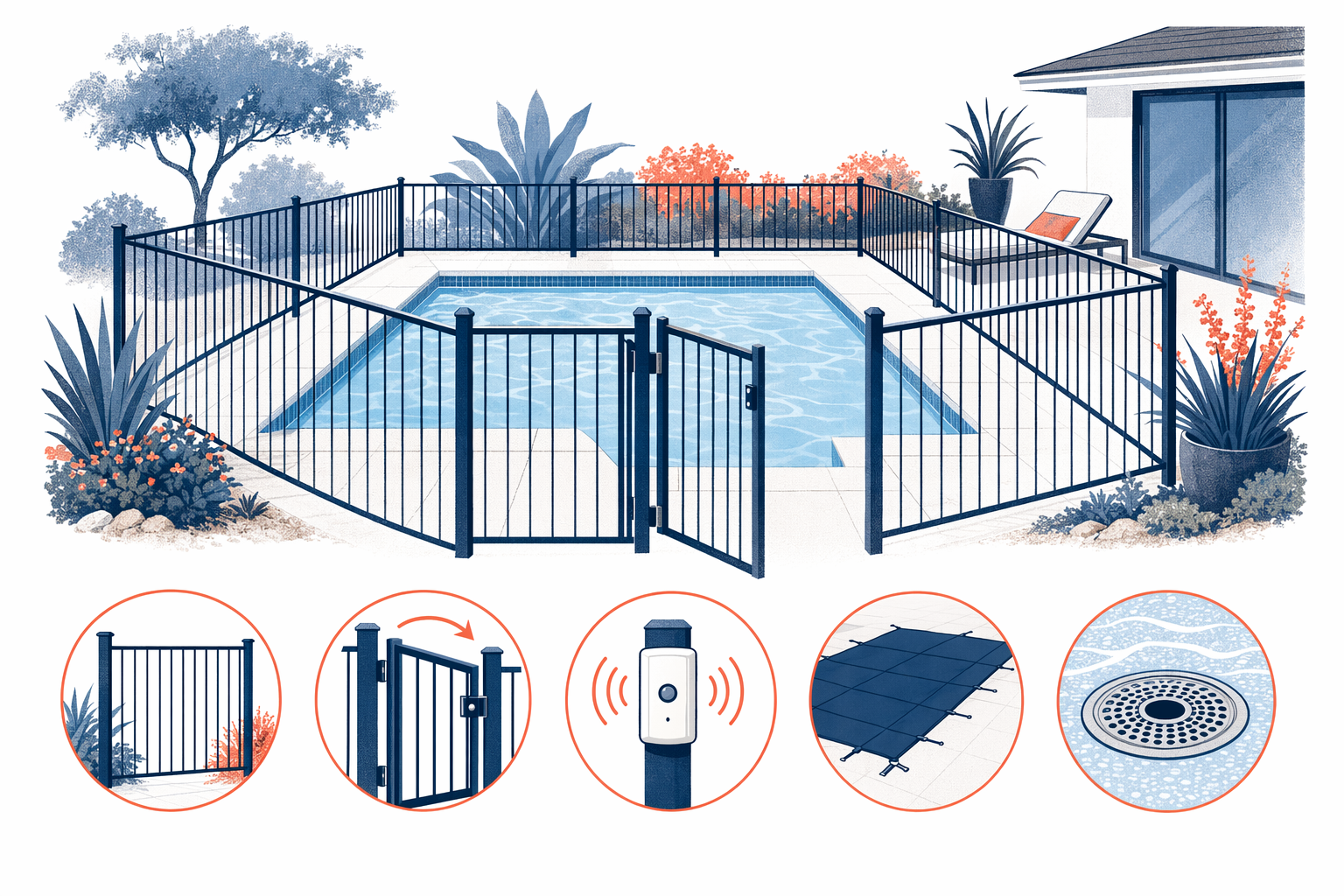
Why pool safety upgrades matter
A pool can be a great part of a home, but it also adds real risk. Drowning is fast and silent. Never leave a child unattended near water, even for a minute. Good pool safety uses layers of protection, not just one thing.
That usually means some mix of:
- A fence that separates the pool from the house or yard
- A self-closing, self-latching gate
- Door and gate alarms
- A safety cover that is made for the pool
- Clear rules, close supervision, and secure equipment areas
- Safer drain covers and related anti-entrapment updates
Code compliance matters too. Pool rules are local. Your city, county, or state may require specific fence height, gate hardware, alarm types, or drain safety equipment. Older pools often need updates after a home sale, renovation, or insurance review.
PoolSteward does not do the work or give legal advice. We help you compare licensed and insured pool pros for existing-pool safety improvements. You can also read our pool safety basics if you want a simple overview before talking to a pro.
Common upgrades for an existing pool
Some safety jobs are small. Others are part of a larger repair or renovation. A good pro will look at the whole setup, not just one item.
Barrier and access upgrades
- New or improved pool fencing
- Self-closing, self-latching gates
- Gate latch relocation to meet height rules
- Door alarms for doors leading to the pool area
- Pool-entry alarms or perimeter alarms in some setups
Cover and surface safety
- Safety covers sized and anchored correctly
- Deck repairs that reduce trip hazards
- Handrails or step rails where needed
- Better lighting around the pool and path areas
Drain-entrapment and circulation safety
- Updated drain covers
- Dual-drain or other compliant suction-side improvements where applicable
- Equipment changes tied to safer circulation operation
Project tie-ins
Safety work is often done together with equipment repair or a larger resurfacing and renovation project, especially if the pool is older.
One important note: a pool pro may identify code-related issues, but some jobs can involve other licensed trades or permit requirements depending on your area. Always ask who is doing which part of the work and whether permits or inspections are required.
How the process usually works
- You describe the pool and your concern. Tell us what you already know: fence issue, old gate, missing alarm, drain cover concern, failed inspection, or insurance request.
- We match you with pool pros. PoolSteward is a free matching service. Participating pros pay a flat fee. You do not pay us to get matched.
- The pro evaluates the existing pool. They may look at pool access points, equipment area, drains, cover condition, and visible hazards.
- You get a written scope and price. Ask for the exact work, materials, who pulls permits if needed, and what is included.
- You compare and choose. You decide who to hire, what upgrades to do now, and what can wait.
- Final walk-through. Before final payment, confirm the installed items match the written scope and that any required inspection steps are complete.
Use get matched when you are ready to start. And before paying a deposit, verify the contractor's license and insurance yourself and get the price and scope in writing.
Typical cost ranges and what changes the price
Safety-upgrade pricing can vary a lot because every pool layout is different. These are typical ranges and estimates, not quotes or guarantees. The real price depends on the pool's size and condition, the equipment, the scope of work, and your area.
Here are some common examples homeowners may see:
- Gate adjustment or latch replacement: often a smaller service call, but prices vary by hardware and labor minimums
- Door or gate alarms: typically modest hardware cost plus installation
- Safety cover replacement or new anchors/hardware: can range from a few hundred dollars to a few thousand depending on pool shape and cover type
- Drain cover updates: usually depends on the pool's existing drain setup and parts availability
- More involved suction or circulation safety corrections: can cost much more if plumbing or equipment changes are needed
- Deck or handrail safety repairs: often priced by material, condition, and labor complexity
For context on related pool costs, owners often see:
- Weekly maintenance around $30-$90 per visit or $100-$350 per month
- Leak detection around $300-$600
- Pool pump replacement around $700-$2,500 installed
- Spring opening or fall closing around $200-$500
Those examples help show how pool service pricing works, but your safety-upgrade job may be lower or higher depending on what the pro finds. If you want broader pricing context, see our costs guide.
A good rule: if one bid is far lower than the others, ask what is not included. Cheap often means missing permit handling, lower-grade hardware, no inspection coordination, or incomplete scope.
Timeline: what to expect
Simple safety fixes can move quickly. Larger code-related upgrades can take longer.
Often quicker jobs
- Replacing basic hardware
- Adjusting gates
- Installing some alarms
- Swapping certain covers or anchors
Often longer jobs
- Work that needs permits or inspections
- Drain or suction-side safety corrections
- Repairs tied to old decking, coping, or resurfacing
- Jobs that need special-order parts or custom cover measurements
Typical timing can look like this:
- Evaluation and written scope: a few days to 1-2 weeks
- Scheduling after approval: a few days to a few weeks, depending on season and local demand
- Small install jobs: sometimes same day or 1 day
- Larger corrections: several days or more, especially if another trade is involved
Ask the pro these timing questions up front:
- What can be fixed now for immediate risk reduction?
- What needs permit approval or inspection?
- What parts are in stock?
- Will the pool be unusable during the work?
If the pool also has signs of water loss or structural wear, it may make sense to combine safety work with leak detection and repair or renovation planning so you do not pay twice for overlapping labor.
Pros, tradeoffs, and where owners get burned
Safety upgrades are worth doing, but it helps to go in with clear eyes.
Pros
- Better protection for children, guests, and pets
- Lower chance of easy unsupervised access to the water
- Better odds of passing local inspection or satisfying insurance requests
- Peace of mind when the pool is not in use
- Safer setup for older pools that were built under old rules
Tradeoffs
- Some upgrades change the look of the yard
- Better covers and hardware can cost more up front
- Permit and inspection steps can slow the project
- One fix may uncover another issue, especially on older pools
Where owners get burned
- Hiring someone who is not properly licensed or insured
- Assuming a handyman can handle code-sensitive pool work
- Paying a deposit without a written scope
- Believing "up to code" without asking which code and who verifies it
- Treating one device like a complete safety plan
No single product makes a pool safe by itself. You still need supervision. Never leave a child unattended near water. Use layers: barriers, self-closing gates, alarms, covers, and active adult attention. For any electrical, plumbing, structural, or code-related work, make sure the right licensed pro is involved and that you verify coverage and credentials yourself.
What to ask before you hire
Bring these questions to every estimate. Short, clear questions get better answers.
- Are you licensed and insured for this type of pool work in my area?
- Can you give me your license number and proof of insurance so I can verify them?
- What specific safety issues do you see at my pool?
- Which improvements are most important right now, and which can wait?
- Does this job require permits or inspection? If yes, who handles that?
- Will you use code-compliant hardware and listed safety products where required?
- If drain safety is involved, what exactly are you replacing or updating?
- What is included in the written price, and what could cause extra cost?
- What warranty applies to labor and materials?
- Will another trade be needed for any part of this job?
Then compare the answers side by side. Do not choose on price alone. Choose on scope, safety, communication, and documentation.
If you want help comparing companies, read how to vet a pool service company. It will help you ask better questions and spot vague promises before you sign.
If your pool has old gates, weak barriers, missing alarms, or outdated drain safety parts, fix those problems soon. Use layers of protection, never leave a child unattended near water, and only hire licensed, insured pros after you verify their credentials and get the scope and price in writing.