Green Pool? How It Gets Cleared Up
A green pool can often be cleared, but the fix depends on **why** it turned green. In most cases it is algae, low sanitizer, poor filtration, or a problem with the pump, filter, or water balance.
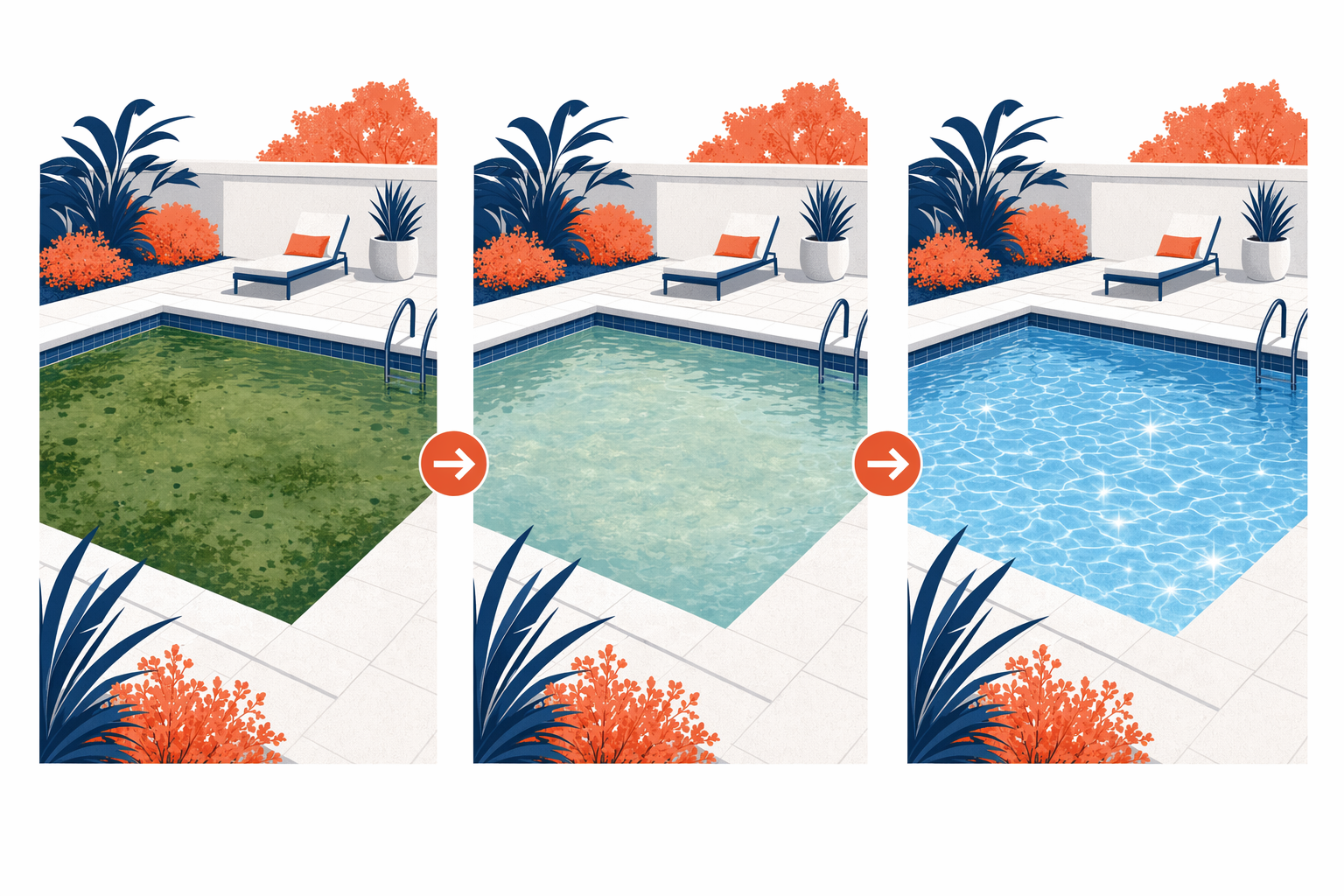
The short answer: green water is usually algae, but not always
Most green pools are green because algae started growing after the sanitizer dropped too low, the water got out of balance, or the pool was not circulating and filtering well enough. Heavy rain, hot weather, missed service, a broken pump, and clogged filters can all help algae take over fast.
But "green" does not always mean the same thing:
- Cloudy green often points to active algae plus dirty water.
- Clear green can sometimes mean metals in the water, especially copper, not just algae.
- Dark green with debris often means the pool sat too long without cleaning or circulation.
That is why cleanup is not one simple recipe. The usual path is to test the water, correct the balance, make sure the equipment is working, brush and vacuum the pool, and use the right sanitizer treatment. If the filter, pump, or other equipment is failing, that may need repair before the pool will stay clear. If you want help comparing local options, PoolSteward can help you get matched with licensed, insured pool pros at no cost to you.
What usually has to happen to clear a green pool
A proper cleanup is not just "dump in shock and hope." In many cases, a pool pro will work through the pool in a basic order like this:
- Inspect the pool and equipment. They look at the pump, filter, skimmer baskets, returns, water level, timer, and visible leaks or blockages. A pool that is not circulating well may turn green again quickly.
- Test the water. Chlorine, pH, alkalinity, stabilizer, and sometimes phosphates or metals all matter. Bad water balance can make chlorine work poorly.
- Remove debris. Leaves, dirt, and organic waste use up sanitizer and feed algae.
- Brush walls and floor. Algae sticks to surfaces. Brushing helps break it loose so the sanitizer and filter can do their job.
- Treat the water. This may include sanitizer and other balancing chemicals based on the test results. A pro often doses more safely and more accurately.
- Run the filtration system long enough. Cleanup often takes more than one cycle. Filters may need to be cleaned or backwashed during the process.
- Vacuum out dead algae and re-test. The pool may turn from green to cloudy before it gets clear.
If the water keeps turning green, the root cause may be more than chemistry. Common hidden problems include:
- A weak or failing pump
- A dirty, undersized, or damaged filter
- Poor circulation from clogged lines or closed valves
- A heater, chlorinator, or other equipment issue
- A leak that causes constant water loss and unstable chemistry
If you suspect equipment trouble, see pool equipment explained or compare help for equipment repair.
How long it takes, and what it may cost
A lightly green pool may clear in a day or two. A dark green pool with heavy algae, debris, or equipment problems can take several days, sometimes longer. The exact time depends on the pool's size and condition, the equipment, the scope of work, and your area.
Typical costs are usually a mix of cleanup work, chemicals, and sometimes repairs:
- Weekly maintenance is often about $30-$90 per visit or $100-$350 per month for regular service after the pool is back under control.
- A one-time green-pool cleanup can vary a lot based on how bad the water is, how many visits are needed, and whether extra chemicals or filter cleaning are required.
- If the pump has failed, replacement is often around $700-$2,500 installed.
- If a heater issue is part of the problem, repair may run $150-$700, while replacement is often $2,000-$5,000+.
- If there may be a hidden leak affecting water level and chemistry, leak detection often runs about $300-$600.
- If the finish is rough, stained, or deteriorated and algae keeps hanging on in damaged surfaces, resurfacing or replastering can run about $5,000-$20,000+.
Those are typical ranges, not quotes. Real price depends on your pool's size and condition, the equipment, the scope of work, and your area. If you want a broader sense of owner costs, start with costs.
One honest tip: the cheapest cleanup is often not the best value if the company does not fix the reason the pool turned green. A low upfront number can turn into repeat visits, more chemicals, and the same problem again.
When you can handle it yourself, and when it makes sense to hire a pro
Some owners can handle a mild algae problem themselves, especially if the equipment works, they can test the water correctly, and they are comfortable following product labels exactly. But a lot of people lose time and money by guessing.
It often makes sense to hire a licensed, insured pro when:
- The pool is dark green, swampy, or full of debris
- The water clears a little, then turns green again
- The pump, filter, timer, heater, or cleaner is not working right
- You suspect metals instead of algae
- The pool may have a leak or constant water loss
- You do not want to handle pool chemicals yourself
- You need ongoing weekly maintenance after cleanup
If you hire someone, protect yourself:
- Hire licensed and insured pool pros where required, and verify the license and insurance yourself.
- Ask what they believe caused the green water.
- Get the scope of work and price in writing before any deposit.
- Ask whether the filter will be cleaned, whether repeat visits may be needed, and what is included in the price.
- Compare more than one option when you can. You compare quotes, you choose who to hire, and you hold the final payment.
PoolSteward is a free matching service. We do not clean pools or handle chemicals. We help pool owners compare local, licensed, insured pros.
What to do next so it does not happen again
Once the pool is clear, the goal is to keep it from turning green the next time you get busy, go out of town, or have a stretch of hot weather.
Good prevention usually comes down to a few basics:
- Keep up with regular testing and balancing
- Make sure the pump and filter are actually moving water well
- Clean baskets, brush surfaces, and remove debris before it sits too long
- Keep a regular service schedule during heavy-use months
- Deal with leaks, bad circulation, or failing equipment early
If you are not sure what normal water care should look like, read pool water chemistry basics. If the pool keeps losing water or greening up even with treatment, it may be time to compare help for leak detection and repair.
And one more thing: pool safety comes first, even during cleanup. Drowning is fast and silent. Never leave a child unattended near water. Use layers of protection like fences, self-closing gates, alarms, covers, and close supervision, and follow local safety and building codes. For chemicals, store them safely, never mix chemicals, and follow label directions. If you want a refresher, see pool safety basics.
If your pool is green, do not assume one chemical treatment will fix it. The usual cause is algae, but weak circulation, a dirty filter, equipment trouble, leaks, or metals can also be part of the problem. Get the water and equipment checked, compare written estimates from licensed and insured pros, and fix the cause so the pool stays clear.