How Much Does a Pool Pump Cost to Replace?
For most US pool owners, a pool pump replacement typically runs **about $700 to $2,500 installed**. The real price depends on the pump size and type, your pool equipment setup, the condition of the plumbing and wiring, and where you live.
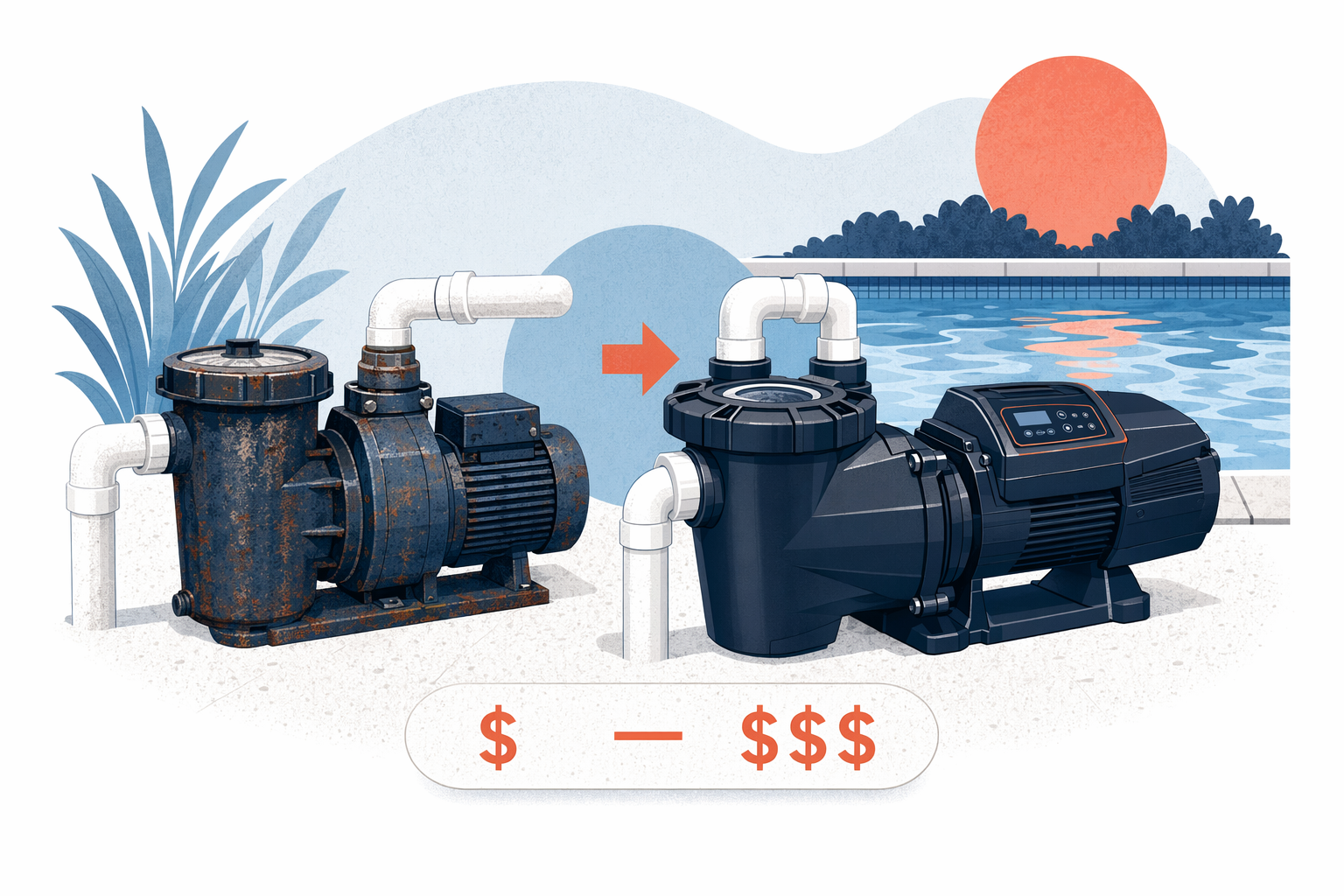
The short answer: typical pool pump replacement cost
If your pool pump has failed, the installed replacement cost is usually around $700 to $2,500 for a typical in-ground residential pool. Some small, simple jobs may land near the low end. Larger systems, variable-speed pumps, or jobs that need extra plumbing or electrical work can go higher.
A few honest price ranges pool owners commonly see:
- Pump motor only replacement: often $300-$900+ when the wet end and housing are still in good shape
- Full pool pump replacement installed: commonly $700-$2,500
- Variable-speed pump replacement: often $1,200-$2,500+ installed
- Extra plumbing, valves, unions, or pad cleanup: may add to the total
The biggest mistake homeowners make is comparing one number to another without checking the scope of work. One pro may be pricing just the pump swap. Another may include new unions, cleanup, startup, hauling away the old unit, and checking for leaks.
Before you hire anyone, get the price and scope in writing. Hire licensed and insured pool pros when your area requires it, and verify the license and insurance yourself. If you want help comparing local options, you can use PoolSteward to get matched with pros at no cost to you.
What changes the price
Pool pump replacement is not one flat price because pools are not all built the same. These factors usually move the number up or down:
1. Pump type
A basic single-speed replacement can cost less up front, but many owners now choose variable-speed pumps for lower energy use and quieter operation. They usually cost more to buy and install.
2. Horsepower and flow needs
Bigger is not always better. An oversized pump can waste energy and may not be the best fit for your filter and plumbing. A good pro should size the pump to the pool and equipment, not just copy whatever was there before.
3. Motor only vs full pump
If the pump housing, basket, and wet end are still in solid shape, a motor-only repair may cost less. If the housing is cracked, badly corroded, leaking, or very old, a full replacement often makes more sense.
4. Pad condition and plumbing work
Old pipes, brittle fittings, poor layout, stuck valves, or missing unions can add labor and materials. A "simple swap" can stop being simple fast.
5. Electrical setup
Some replacements need electrical changes, bonding checks, timer or controller adjustments, or a new breaker setup depending on local code and the pump model. PoolSteward does not provide electrical advice, so use a qualified pro and follow local code requirements.
6. Brand and warranty terms
Some pumps cost more because of model features, better efficiency, or warranty coverage. Ask what warranty applies to the equipment and the labor.
7. Your local market
Labor rates vary by area. Busy seasons can also affect scheduling and price.
If you want more background on how pool systems work, pool equipment explained is a good place to start.
Repair or replace? How to think it through
Sometimes a pump does not need full replacement. Sometimes replacement is the cheaper move in the long run. Here is a practical way to decide:
- Consider repair first if the issue is a capacitor, seal, basket lid, small leak, or motor problem on an otherwise solid pump
- Lean toward replacement if the pump is older, loud, leaking badly, rusted, cracked, hard to prime, or has repeated failures
- Replace sooner if the new pump could cut energy use enough to matter month after month
Common signs your pump may be near the end:
- Loud grinding or screeching noises
- Burning smell or tripped breaker
- Water leaking from the seal plate or housing
- Weak circulation or poor skimming
- Trouble priming
- Air bubbles that do not go away after other causes are checked
- Motor gets hot and shuts off
A useful rule of thumb: if the repair is a big fraction of a new installed pump cost, ask for both options in writing. Compare today's repair cost, likely remaining life, warranty, and energy use.
Also remember that pump problems are not always just pump problems. Dirty filters, suction-side air leaks, clogged lines, bad valves, or water-level issues can mimic pump failure. If your pool is also losing water, you may need leak detection and repair rather than a pump swap alone.
For owners who want to understand the chemistry side too, bad circulation can lead to cloudy water and algae, but chemicals still need to be handled safely. Never mix pool chemicals. Store them safely and follow label directions. In many cases, a pro can diagnose circulation and dose chemicals more safely than trial and error by the homeowner.
What a fair pump replacement estimate should include
A good estimate should be easy to read and specific. If it is vague, ask questions.
Look for these items:
- Exact pump model being installed
- Whether it is motor only or full pump replacement
- Pump speed type, horsepower, and key specs
- New unions, fittings, valves, or plumbing changes included or not
- Startup and basic testing included or not
- Haul-away of the old pump included or not
- Any needed electrical coordination explained clearly
- Equipment warranty and labor warranty terms
- Total price before you pay any deposit
Ask these questions before you say yes:
- Why is this pump the right size for my pool and filter?
- Is there a lower-cost repair option, and what are the pros and cons?
- Will this price change if you find cracked plumbing or other problems?
- What is excluded from the estimate?
- Do you carry license and insurance for this kind of work in my area?
This is where many owners get burned. A cheap number can turn into a bigger bill if the original scope was thin. Compare at least two written estimates when you can. PoolSteward is free for pool owners, and you can get matched to compare local licensed and insured pros.
If your pool also needs regular care after the repair, you can review typical weekly maintenance options too.
What to do next if your pump just failed
If your pump stopped working today, keep the next steps simple:
- Turn power off to the equipment if you smell burning, hear severe grinding, or see active leaking around the pump.
- Do not try random chemical fixes for a circulation problem. Poor circulation can quickly affect water quality, but chemicals must be handled carefully.
- Take a few photos of the pump, label, filter pad, and any leaking area. This helps when you talk to a pro.
- Get 2-3 written estimates if time allows. Compare scope, not just price.
- Verify license and insurance yourself before hiring.
- Do not pay in full upfront. You compare quotes, you choose who to hire, and you hold the final payment until the work matches the written scope.
If you are not sure whether the pump is the only problem, ask for a full equipment check. Many pools have more than one issue at once, especially older systems. You can also review broader equipment repair information before making a decision.
One more reminder on safety: drowning is fast and silent. If your pool area is open while equipment is being inspected or worked on, never leave a child unattended near water. Use layers of protection like fences, self-closing gates, alarms, covers, and active supervision, and follow local safety and building codes.
A normal pool pump replacement usually costs about $700-$2,500 installed. Get 2-3 written estimates, make sure the scope is clear, verify license and insurance yourself, and compare repair vs replacement based on the pump's age, condition, and energy use.