Seasonal openings & closings
Opening and closing a pool is routine work, but it is easy to get expensive if something is missed. PoolSteward helps you compare licensed, insured pool pros for **existing pools** so you can get the scope and price in writing before you book.
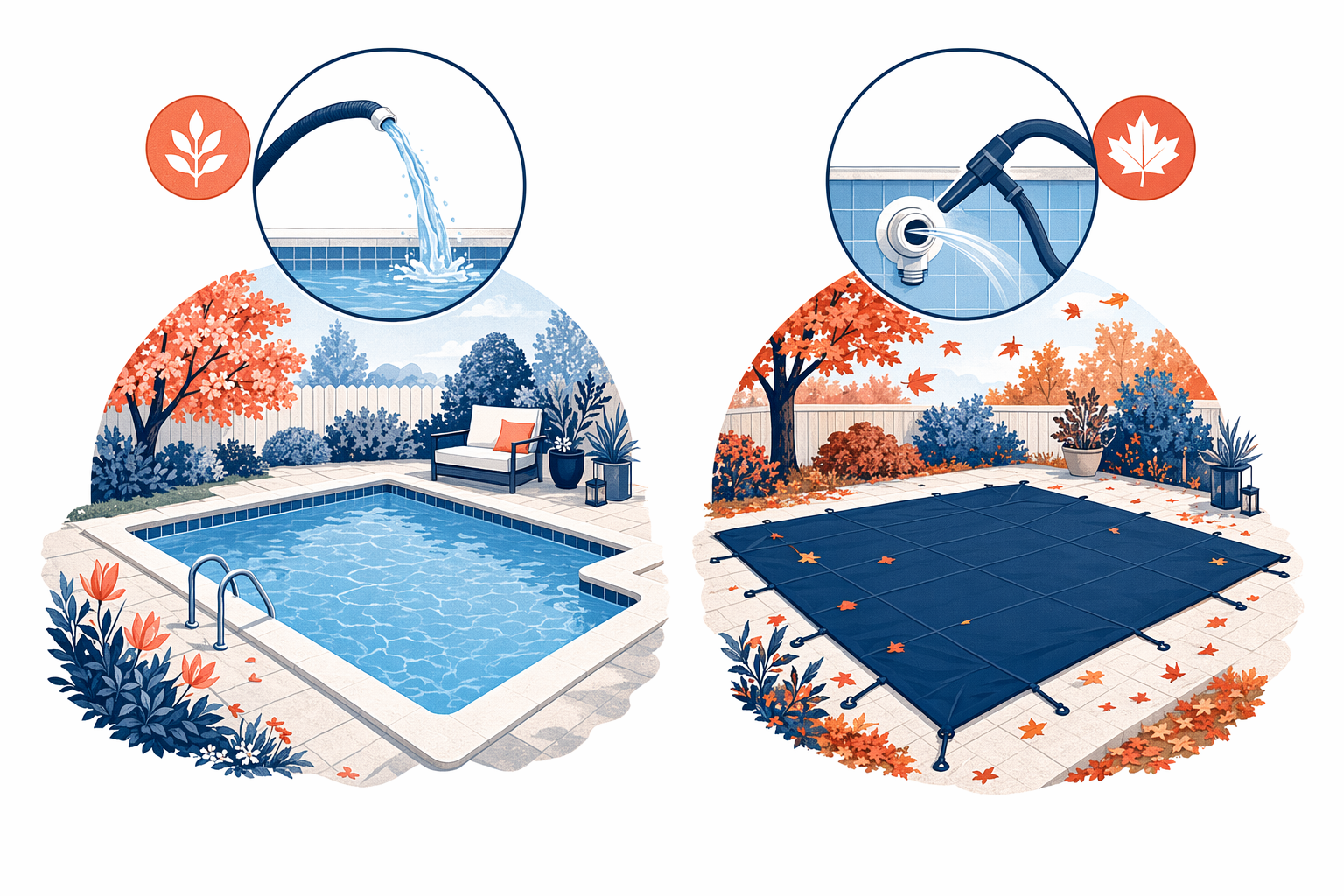
What seasonal opening and closing means
A pool opening gets an existing pool ready for swim season. A pool closing winterizes it for the off-season. The exact steps depend on your pool type, your equipment, your climate, and whether you have a safety cover, heater, spa spillover, automation, or salt system.
In many areas, a typical opening may include removing and folding the cover, reinstalling baskets and fittings, reconnecting equipment, starting the system, checking for obvious leaks, and getting the water moving again. A typical closing may include lowering water if needed, blowing out and plugging lines where appropriate, winterizing equipment, adding winter products if requested, and securing the cover.
What is not always included by default:
- Heavy debris removal or swamp cleanup
- Chemical treatments beyond a basic startup or winterizing add-on
- Repairs to pumps, heaters, filters, lights, valves, automation, or plumbing
- Leak detection
- Stain treatment, algae recovery, acid washing, or resurfacing
That is why the written scope matters. A low advertised price can turn into a much larger bill if the pool is green, the cover is damaged, or the equipment will not restart.
If you also need weekly care after the opening, see weekly pool maintenance.
How the process usually works
For most homeowners, the smoothest process looks like this:
- Share your pool details. Size, in-ground or above-ground, chlorine or salt, major equipment, cover type, and the condition of the water and cover.
- Compare local pros. With PoolSteward, matching is free to you. You compare licensed, insured pool pros and choose who to contact.
- Get the scope in writing. Ask exactly what is included, what is extra, and what happens if equipment does not start or a line will not hold pressure.
- Schedule early. Spring and fall calendars fill up fast. Early scheduling usually gives you better time choices.
- Be there if possible. Especially for the first visit of the season. You can walk the yard, point out shutoffs, and ask questions about equipment condition.
- Approve extra work before it starts. If the pro finds a cracked pump lid, bad pressure gauge, heater issue, or damaged cover anchors, ask for the added price and scope in writing first.
If you are not sure what your equipment does, this quick guide helps: pool equipment explained.
Typical cost ranges
For an existing residential pool, a spring opening or fall closing often runs about $200-$500 each as a typical range. Some pools cost less. Many cost more. The real price depends on the pool's size and condition, the equipment, the scope of work, and your area.
Common reasons the price goes up:
- Mesh or solid cover that needs extra cleaning or pumping off
- Large amount of leaves, dirt, or algae
- Spa, water features, slide, attached hot tub, or complex plumbing
- Salt system, heater, automation, or older equipment that needs troubleshooting
- Extra chemicals, filter cleaning, or cartridge replacement
- Minor repairs found during startup or shutdown
Typical add-on examples homeowners often see:
- Green-to-clear cleanup: can add a few hundred dollars or more depending on severity
- Filter cleaning: often an extra line item
- Equipment repair: separate from opening/closing scope; for example, a pump replacement often runs about $700-$2,500 installed, while heater repair may run $150-$700 and replacement often starts around $2,000-$5,000+
- Leak detection: often about $300-$600 if the pool is losing water beyond normal evaporation
Ask one simple question: What is included at this price, and what would be billed separately? If you need repair work too, start here: equipment repair.
Best timing for scheduling
Timing matters because weather and water temperature affect both the work and the risk of problems.
For spring openings:
- In many cooler climates, owners book 2-6 weeks before they want to swim.
- Opening before water gets too warm can help reduce algae and swamp cleanup.
- If you wait until late spring, your best installers may already be full.
For fall closings:
- In freeze-prone areas, close before hard freezes and while the schedule still has room.
- In milder climates, some owners run year-round and only do light seasonal service.
- If your area still needs winterization, do not guess. Ask a local licensed, insured pro what is standard where you live.
A few practical tips:
- Book early, then confirm a week ahead.
- Send photos of the pool, pad, cover, and any visible damage.
- Tell the pro if the pool lost water over winter, the breaker trips, or the heater had issues last season.
If you want local help comparing options, use PoolSteward's free matching.
Pros, cons, and when a pro is worth it
Some owners handle parts of an opening or closing themselves. Others hire it out every year. Here is the honest tradeoff.
Hiring a pro: pros
- Better chance of catching equipment issues early
- Safer handling of winterizing steps and startup checks
- Less risk of expensive mistakes with lines, plugs, valves, and heaters
- Faster if the pool has a complex setup
Hiring a pro: cons
- You pay for labor and scheduling convenience
- Spring and fall windows can be busy
- The cheapest option is not always the best value
DIY or partial DIY: pros
- Lower out-of-pocket cost if you know your system well
- More control over timing
DIY or partial DIY: cons
- Easy to miss something small that becomes expensive later
- Water chemistry can get away from you fast after opening
- Older equipment may fail during startup and need diagnosis
For many owners, the smart middle ground is this: do the simple prep yourself, then hire a licensed, insured pro for the technical work. Examples include clearing access to the equipment pad, trimming plants, removing yard furniture, and taking photos of visible issues.
For water balance basics after opening, read pool water chemistry basics. Never mix chemicals. Store them safely, follow label directions, and keep children away. A pro often doses more safely.
Questions to ask before you book
Short questions now can save a lot of money later. Ask these before you say yes:
- Are you licensed and insured for this work in my area? Verify the license and insurance yourself.
- What exactly is included in the opening or closing price? Ask for the scope in writing.
- What is extra? Chemicals, heavy debris, filter cleaning, cover pump-out, salt cell cleaning, and repairs are common add-ons.
- Do you test and start all major equipment? Pump, filter, heater, chlorinator or salt cell, automation, lights, valves, and water features.
- What happens if something is broken? Ask whether troubleshooting is included or billed separately.
- Will you note any recommended repairs in writing? Helpful for planning and price comparisons.
- Do I need to be home? Many owners prefer to be there for the first opening.
- What payment is due, and when? Get the price, scope, and deposit terms in writing before any deposit.
If a pro is vague, pushes you to pay before giving a clear scope, or cannot show current license and insurance, keep looking. This guide can help: how to vet a pool service company.
Safety and smart homeowner checks
Pool safety matters in every season, not just when people are swimming. Drowning is fast and silent. Never leave a child unattended near water. Use layers of protection: fences, self-closing gates, alarms, covers, and close adult supervision. Follow local safety and building codes.
A few practical checks for opening and closing season:
- Walk the yard before the appointment and secure pets.
- Make sure gates and fence latches still work.
- Look at the cover for tears, sagging, or failed anchors.
- Keep children away from the pool area while work is being done.
- Store pool chemicals safely. Never mix them.
Also remember: PoolSteward is a free matching service. We do not service pools or perform repairs. We help you compare local licensed, insured pros for your existing pool so you can compare estimates, you choose who to hire, and you hold the final payment.
If your pool also needs bigger work after inspection, such as surface damage or aging finishes, learn more about resurfacing and renovation.
Pool opening and closing usually costs about $200-$500 each for an existing pool, but the real price depends on your pool, equipment, condition, and area. Get the full scope in writing, verify license and insurance yourself, approve add-ons before work starts, and compare a few local pros before you choose.